खजूर ज्ञान · खराक
खराक क्या है? खजूर के कुरकुरे पीले चरण को समझना
खराक अधूरा soft date नहीं है। यह mature, पूरी तरह रंग विकसित कर चुका और अभी भी crisp fruit है—एक eating experience जिसे timing define करती है।
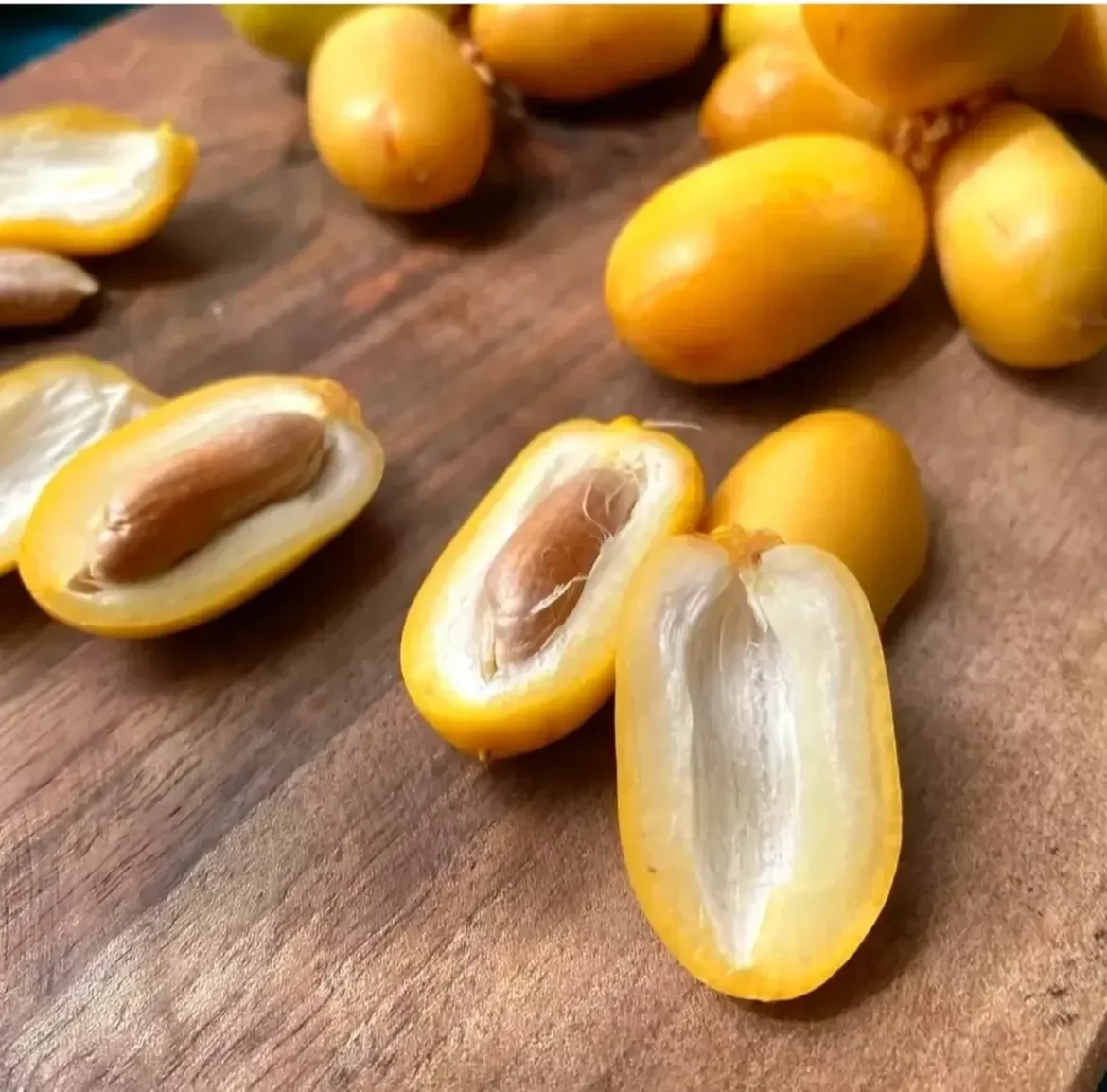
खराक को अक्सर बहुत सरल शब्दों में “कच्चा खजूर” कहा जाता है।
यह कहना सुविधाजनक है, लेकिन वैज्ञानिक दृष्टि से अधूरा है।
विकास की शुरुआती अवस्था में हरा खजूर वास्तव में अपरिपक्व होता है। इसके विपरीत, खराक आमतौर पर फल की परिपक्व, सख्त और पूरी तरह रंग विकसित कर चुकी अवस्था से जुड़ा होता है—वही चरण जिसे अंतरराष्ट्रीय date science में प्रायः Khalal और कुछ क्षेत्रों में Bisr कहा जाता है।
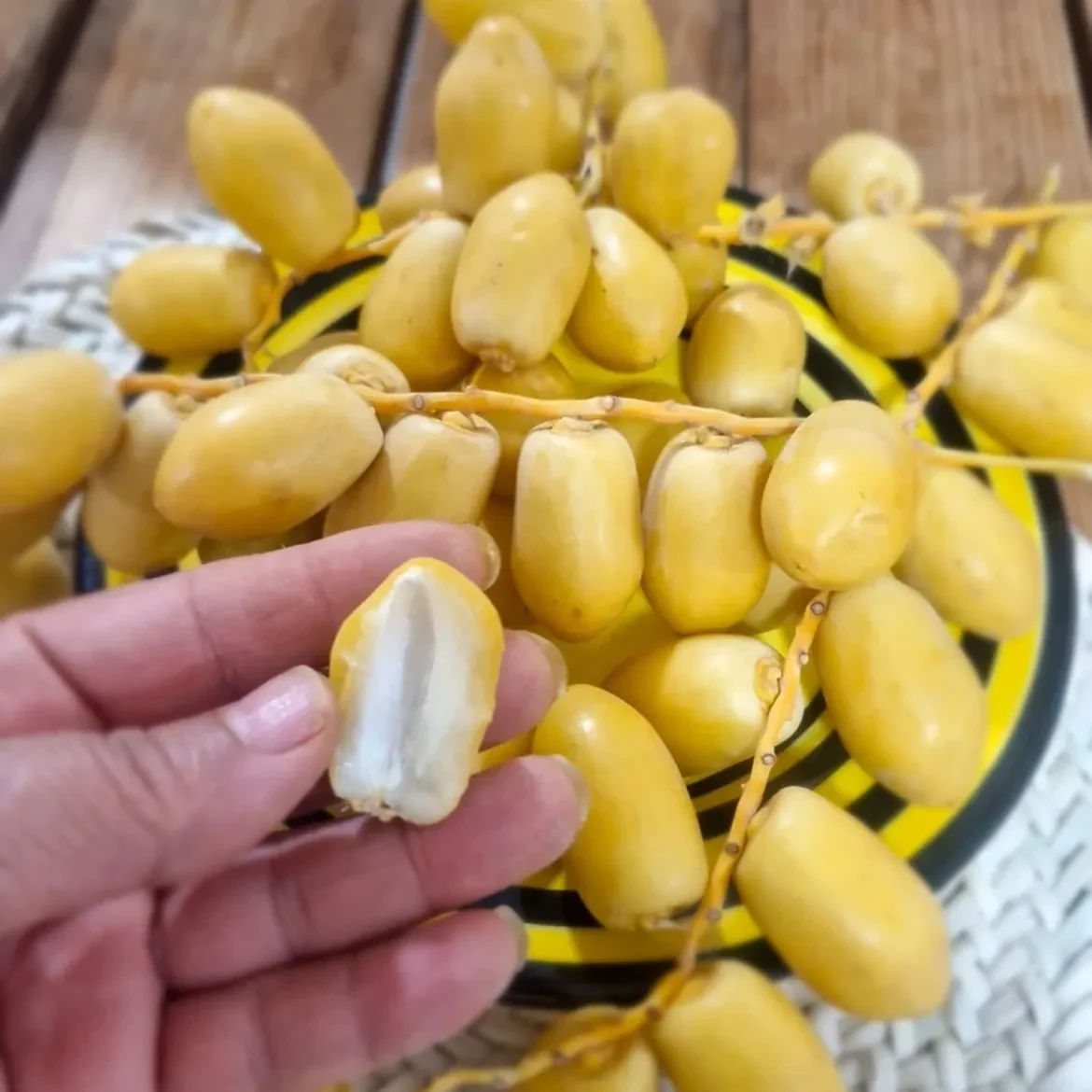
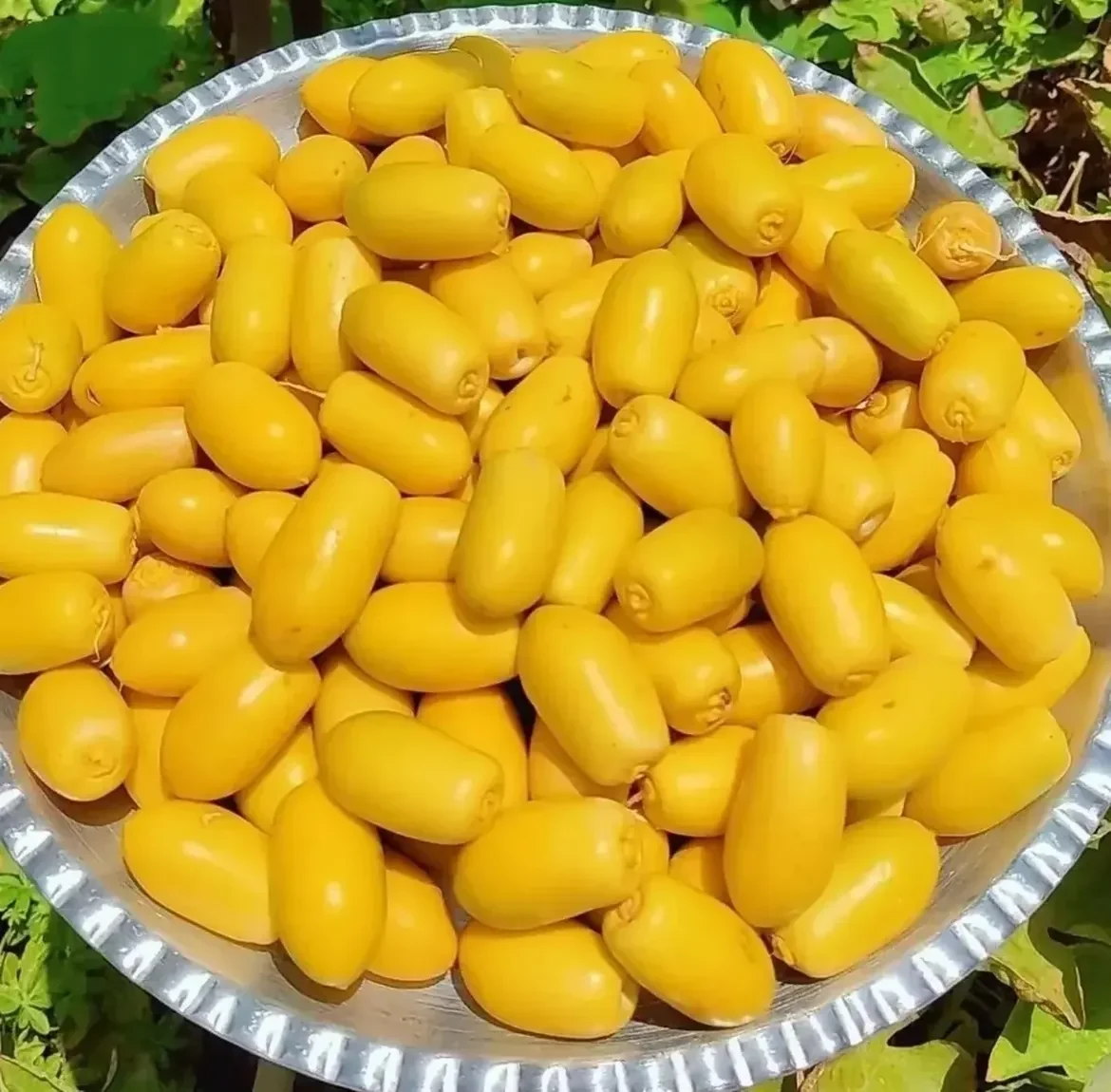
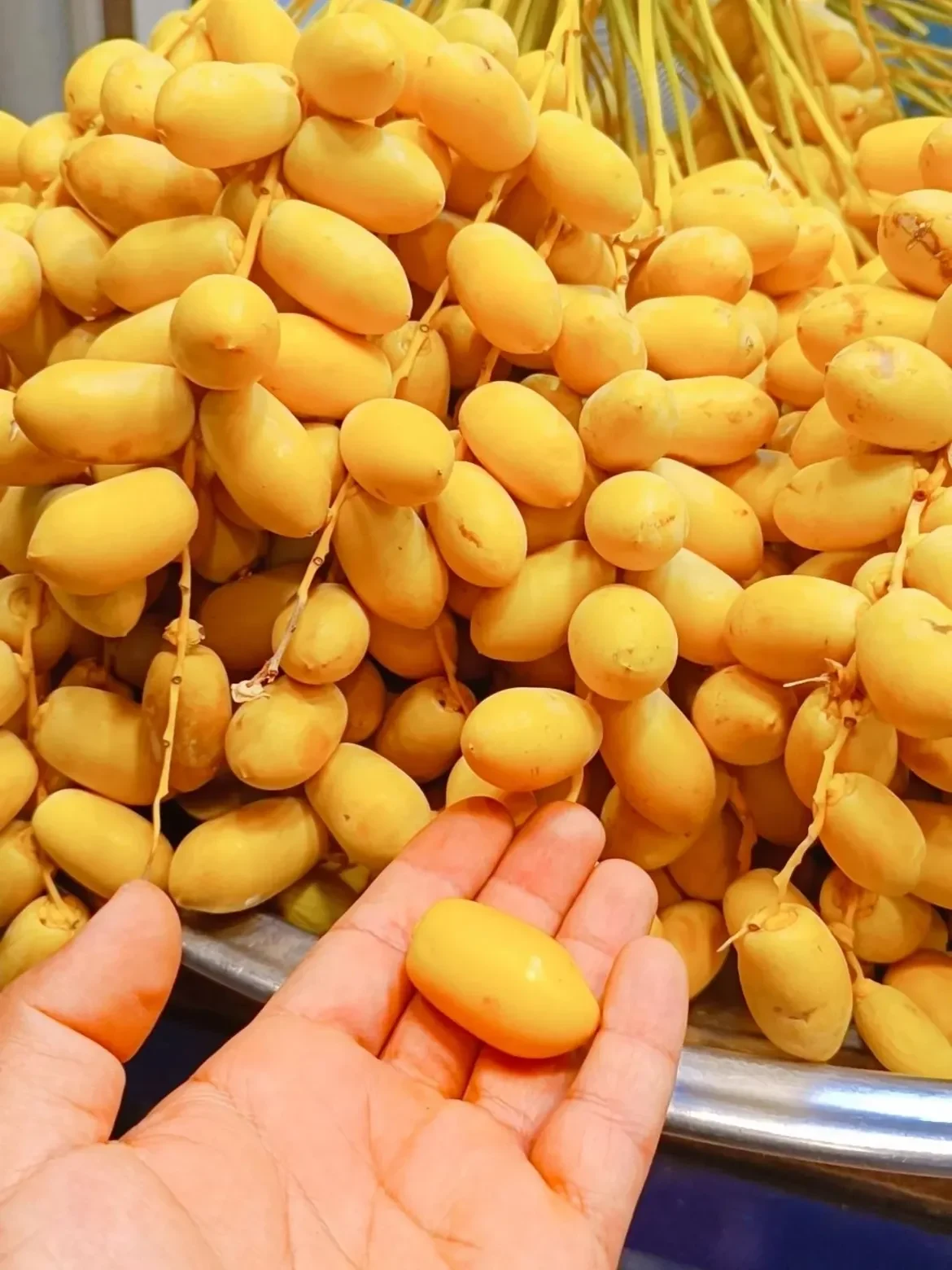
इस बिंदु तक फल अपने शारीरिक विकास का बड़ा हिस्सा पूरा कर चुका होता है। cultivar के अनुसार इसका रंग चमकीला पीला, सुनहरा, नारंगी या लाल हो सकता है। गूदा अभी भी सख्त रहता है। त्वचा अपेक्षाकृत चिकनी और तनी हुई होती है। काटने पर साफ़, crisp bite मिलती है।
यह अभी उस मुलायम, गहरे और दबने वाले texture तक नहीं पहुँचा होता जिसे बहुत से अंतरराष्ट्रीय उपभोक्ता खजूर से स्वतः जोड़ते हैं।
और यही पूरी बात है।
खराक किसी मुलायम खजूर का अधूरा संस्करण नहीं है। यह खजूर के फल का maturity के एक अलग क्षण पर अनुभव है।
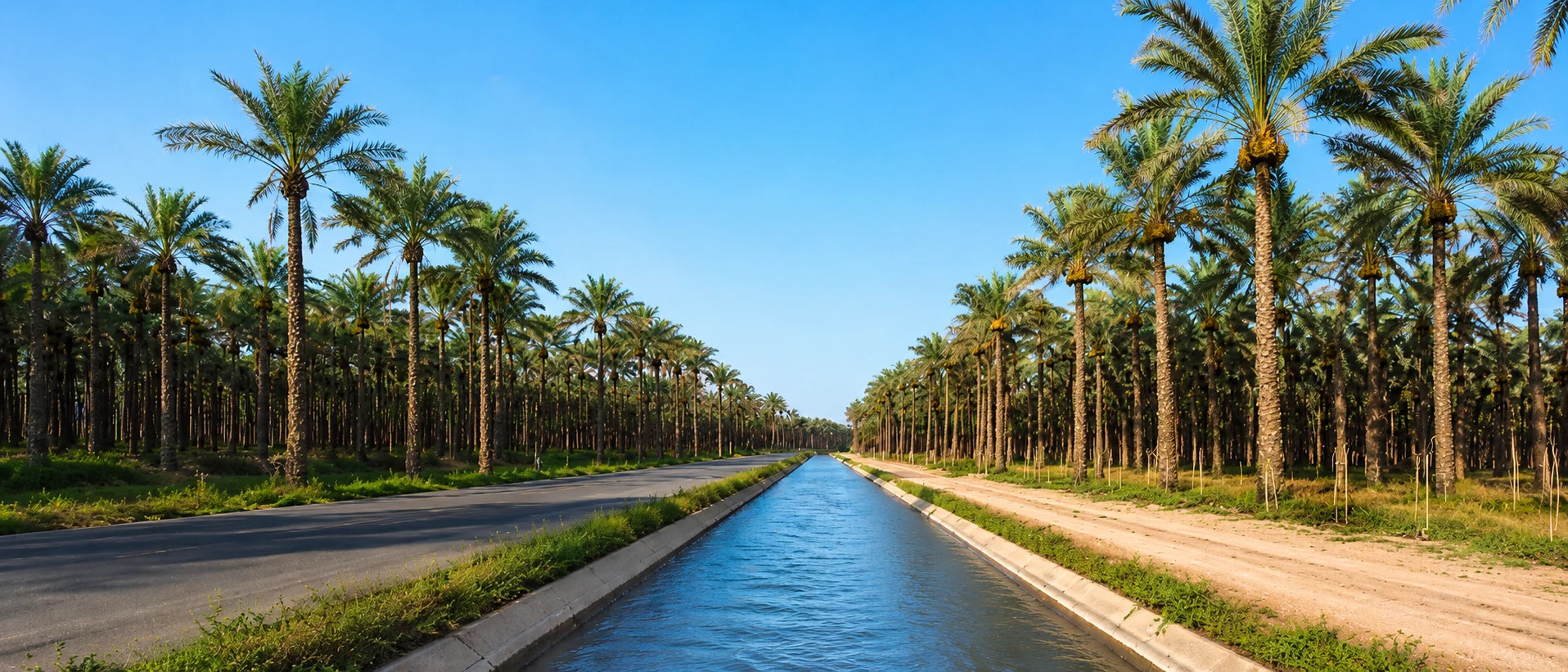
दक्षिणी ईरान में, जहाँ खजूर के पेड़ कृषि जीवन का हिस्सा हैं और केवल पैक किए हुए food category नहीं, यह अंतर परिचित है। किसान बदलते हुए फल को केवल रंग से नहीं, बल्कि स्पर्श, स्वाद, firmness और harvest के समय उसके व्यवहार से पहचानते हैं।
खराक, रुतब और पूरी तरह पका खजूर एक ही palm से आ सकते हैं।
लेकिन वे एक जैसी eating experience नहीं देते।
खराक एक नज़र में
खराक खजूर के फल की वह mature, fully coloured और अभी भी firm अवस्था है जो अंतरराष्ट्रीय terminology में प्रायः Khalal stage से जुड़ी होती है। इसे फल के Rutab में मुलायम होने और बाद में fully ripened Tamr stage तक पहुँचने से पहले खाया जाता है। इसके मुख्य commercial और sensory गुण colour, firmness, crispness और harvest timing हैं—सिर्फ यह नहीं कि फल “पीला” है।
Kharak, Khalal और Bisr: शब्दावली पर एक नोट
खजूर की terminology अलग-अलग देशों और date-growing regions में बदलती है।
वैज्ञानिक और postharvest literature आमतौर पर Khalal शब्द का उपयोग उस mature, fully coloured और firm stage के लिए करती है। कुछ Arabic-speaking क्षेत्रों में समान coloured और crisp stage के लिए Bisr शब्द भी मिलता है।
दक्षिणी ईरान में, Rutab बनने से पहले खाए जाने वाले firm fruit के लिए परिचित स्थानीय शब्द Kharak है।
ये शब्द हर क्षेत्र और हर cultivar में पूरी तरह one-to-one अर्थ में इस्तेमाल नहीं होते। BAGHERI इसलिए एक सरल practical rule अपनाता है:
हम Dashtestan में परिचित fresh, firm और crisp stage के लिए Kharak शब्द का उपयोग करते हैं, और international buyers के लिए इसका संबंध Khalal से समझाते हैं—बिना स्थानीय शब्द को मिटाए।
हरे फल से Kharak, Rutab और खजूर तक
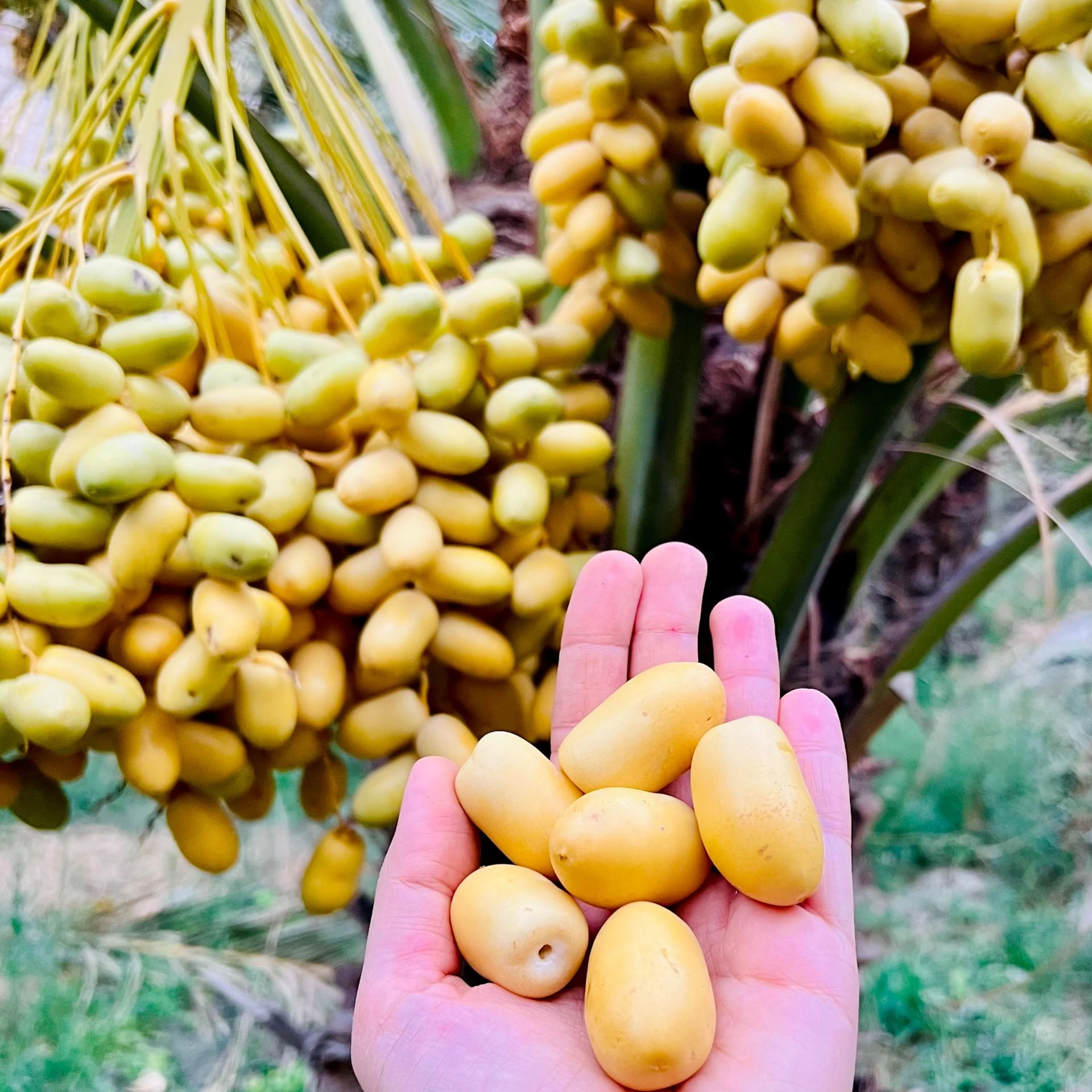
खराक को समझने के लिए फल की ripening journey को देखना उपयोगी है।
वैज्ञानिक literature खजूर के विकास के कई stages का वर्णन करती है। terminology क्षेत्रों के अनुसार थोड़ी बदल सकती है, लेकिन late development और ripening में सामान्य sequence Kimri, Khalal, Rutab और Tamr है। [1]
| चरण | सामान्य रूप | बनावट | व्यावहारिक eating context |
|---|---|---|---|
| Kimri | हरा, विकसित होता फल | बहुत सख्त | सामान्यतः immature |
| Khalal / Kharak | पूरी तरह रंगा हुआ; अक्सर पीला, सुनहरा या लाल | firm और crisp | उपयुक्त cultivars में fresh eating |
| Rutab | आंशिक या व्यापक browning | मुलायम और tender | fresh soft date stage |
| Tamr | गहरा, पूरी तरह पका फल | cultivar के अनुसार soft, semi-dry या dry | वही stage जिसे अधिकांश international consumers “date” मानते हैं |
यह table practical guide है; यह दावा नहीं कि हर cultivar एक ही speed से बदलता है या आखिर में एक जैसी texture देता है।
Kimri: अपरिपक्व हरी अवस्था
Kimri stage में खजूर का फल अभी हरा और developing होता है।
फल आकार में बढ़ता है और महत्वपूर्ण structural तथा biochemical development से गुजरता है। यह सामान्यतः बहुत firm होता है और अधिकांश cultivars में eating stage नहीं माना जाता।
यही वह stage है जिसे अधिक सटीक रूप से immature कहा जा सकता है।
Khalal या Kharak: mature, coloured और crisp
अगला महत्वपूर्ण चरण Khalal है।
दक्षिणी ईरान में Kharak इस firm, coloured stage से गहराई से जुड़ा है। English transliteration अलग-अलग मिल सकती है, लेकिन BAGHERI spelling Kharak का उपयोग करता है।
फल अब हरा नहीं रहता।
palm cultivar के अनुसार skin पीली, सुनहरी या लाल हो सकती है। flesh firm रहता है और काटने पर साफ़, सुनाई देने वाली crunch मिल सकती है।
Date science में Khalal fruit को mature, full-coloured, firm और crisp कहा जाता है। इस stage पर फल खाने में pleasant होगा या नहीं, यह cultivar पर बहुत निर्भर करता है। soluble tannins का स्तर भी महत्वपूर्ण है, क्योंकि ये astringency—मुंह में सूखापन और कसाव—के लिए जिम्मेदार हो सकते हैं।
यही उस बात को समझाता है जिसे date growers पीढ़ियों से जानते हैं:
हर date variety अच्छा Kharak नहीं बनाती।
Rutab: मुलायम होने की शुरुआत
Ripening Kharak पर नहीं रुकती।
जैसे-जैसे फल Rutab की ओर बढ़ता है, visible और structural changes शुरू होती हैं।
फल का एक हिस्सा गहरा होने लग सकता है। flesh softer होती है। moisture distribution और sugar composition बदलते हैं। cell wall उन structural characteristics को खोने लगती है जो Kharak की firm bite बनाती हैं।
Iranian date cultivars पर research ने दिखाया है कि ripening के दौरान कई cell-wall-modifying enzymes की activity बढ़ती है और ये बदलाव fruit softening के साथ coincide करते हैं। [2]
Consumer इस science को तुरंत महसूस कर सकता है।
Crisp snap कम होने लगती है।
फल tender होता जाता है।
Eating experience कभी-कभी apple-like resistance से बदलकर अधिक soft, rich और fresh dates से जुड़े texture की ओर जाती है।
यही Rutab है।
Tamr: fully ripened date stage
और आगे ripening के साथ फल Tamr stage की ओर बढ़ता है—वही रूप जिसे अधिकांश international consumers simply “date” कहते हैं।
Moisture कम होती रहती है और soluble solids अधिक concentrated होते हैं। Iranian cultivars पर research में reducing sugars और total soluble solids सामान्यतः ripening के साथ बढ़े, जबकि moisture घटी। हालांकि exact pattern cultivars के बीच significantly अलग था। [2][3]
फल गहरा होता है और flavour अधिक concentrated महसूस होता है।
Variety के अनुसार Tamr-stage date soft रह सकता है, semi-dry हो सकता है या अधिक firm, raisin-like character विकसित कर सकता है।
International date buyer के लिए यह महत्वपूर्ण है:
“Date” एक ही texture नहीं है।
Cultivar मायने रखता है।
Origin मायने रखता है।
और maturity stage मायने रखती है।
तो क्या Kharak कच्चा खजूर है?
Everyday language में लोग कभी-कभी Kharak को unripe date कहते हैं क्योंकि इसे soft Rutab और fully ripened Tamr से पहले harvest किया जाता है।
लेकिन वैज्ञानिक रूप से इस wording में सावधानी चाहिए।
Khalal stage पर फल सामान्यतः physiologically mature और fully coloured माना जाता है। यह immature green Kimri fruit जैसा नहीं है। Studies और postharvest research Khalal fruit को mature, fully coloured, firm और crisp बताती हैं। [1][6]
एक बेहतर explanation है:
Kharak वह date fruit है जिसे mature, firm और crisp stage पर harvest और consume किया जाता है, इससे पहले कि फल soft Rutab और बाद के Tamr stages की ओर बढ़े।
शब्दों का यह अंतर छोटा लग सकता है।
Growers और buyers के लिए यह छोटा नहीं है।
Kharak को simply “unripe fruit” कहना ऐसा impression दे सकता है कि fruit गलती से बहुत जल्दी तोड़ा गया।
Good Kharak इसका opposite है।
Harvest timing intentional होती है।
Exact stage ही product है।
Kharak crisp क्यों होता है?
Kharak की characteristic crunch इस maturity stage पर fruit structure का परिणाम है।
जैसे-जैसे fruit ripen होता है, उसकी cell walls बदलती हैं।
Iranian date cultivars पर studies ने pectin methylesterase, β-galactosidase, endo-1,4-β-D-glucanase और cellulase जैसे enzymes का अध्ययन किया। ripening के दौरान cell-wall-modifying enzyme activity में वृद्धि fruit softening से जुड़ी थी। [2]
सरल शब्दों में, जो structure Kharak को hard और crisp बनाती है वह ripening के साथ धीरे-धीरे बदलती है।
इसीलिए normal ripening conditions में Kharak हमेशा Kharak नहीं रह सकता।
वही fruit शुरुआत में firm और brightly coloured हो सकता है, फिर soft brown areas विकसित कर सकता है और अंततः काफी softer हो सकता है।
Orchard में खड़ा व्यक्ति transition को देखता है।
Food scientist इसे biochemical language में समझाता है।
Consumer इसे texture में महसूस करता है।
तीनों एक ही process देख रहे हैं।
Kharak कभी-कभी कसैला क्यों लगता है?
Kharak की एक distinctive characteristic संभावित astringency है।
Astringency bitterness के समान नहीं है।
यह dry, tightening sensation है जो कुछ fruits खाने के बाद mouth में महसूस होती है। Strong tea और कुछ persimmons similar feeling दे सकते हैं।
Date fruit में soluble tannins इस characteristic में महत्वपूर्ण role निभाते हैं। [1][6]
Date ripening research ने high soluble tannin levels को कारणों में से एक माना है कि कुछ cultivars firm Khalal stage पर strongly astringent रहते हैं।
Ripening के साथ इन compounds में changes astringency perception को कम कर सकते हैं।
इसी कारण अनेक date varieties Kharak stage पर rarely खाई जाती हैं।
उनका colour attractive हो सकता है।
Texture crisp हो सकता है।
लेकिन astringency enjoyable fresh consumption के लिए अभी बहुत strong हो सकती है।
दूसरे cultivars कहीं अधिक attractive balance देते हैं।
वे Kharak की firmness और crunch बनाए रखते हुए sufficient sweetness और अधिक acceptable astringency विकसित करते हैं।
ऐसे ही Kharak fruits के लिए लोग हर season इंतज़ार करते हैं।
हर date palm अच्छा eating Kharak नहीं देता
इस point पर अधिक attention चाहिए।
Date palm के सैकड़ों named cultivars हैं और उनके fruits size, colour, shape, moisture, sugar composition, texture और ripening behaviour में काफी अलग होते हैं।
Cultivar comparison research बार-बार दिखाती है कि chemical composition और ripening के दौरान changes का pattern cultivar और maturity stage दोनों से strongly influenced होता है। [2][3]
इसलिए यह मानना गलत है कि हर date variety की yellow stage एक जैसी taste करेगी।
कुछ Kharak बहुत astringent हो सकते हैं।
कुछ में sweetness सीमित हो सकती है।
दूसरे sweetness, freshness और crunch का अधिक attractive balance बनाते हैं।
यह अन्य fruits जैसा ही है।
हर grape table grape नहीं होता।
हर apple fresh eating के लिए selected नहीं होता।
हर olive tree से तोड़कर सीधे नहीं खाई जाती।
Biological species एक हो सकती है, लेकिन cultivar characteristics eating experience तय करती हैं।
Kharak को भी इसी तरह समझना चाहिए।
Kharak का स्वाद कैसा होता है?
ऐसे व्यक्ति को Kharak का flavour समझाना कठिन हो सकता है जिसने केवल soft dates खाए हों।
पहला surprise आमतौर पर texture होता है।
Good fresh Kharak firm होता है।
Bite clean होती है।
Flesh teeth को resist करती है और फिर distinct crunch के साथ टूटती है।
इसका flavour सामान्यतः fully ripened date से lighter और fresher होता है। Sweetness मौजूद होती है, लेकिन dark semi-soft date जैसी heavy, concentrated perception जरूरी नहीं होती।
Cultivar और ripeness के अनुसार mild astringent finish भी हो सकती है।
लोग कभी-कभी sensory experience की तुलना pear, crisp apple या sugar cane के कुछ elements से करते हैं।
ये comparisons useful हैं, लेकिन Kharak की अपनी identity है।
यह फिर भी unmistakably date palm का fruit है।
महत्वपूर्ण difference यह है कि fruit को extensive softening और later ripening से जुड़े concentration से पहले अनुभव किया जा रहा है।
Sticky date expect करने वाले व्यक्ति के लिए Kharak surprising हो सकता है।
Southern Iran के harvest season के बीच बड़े हुए व्यक्ति के लिए वह crunch तुरंत familiar है।
Kharak और Haj Bagheri Kharak
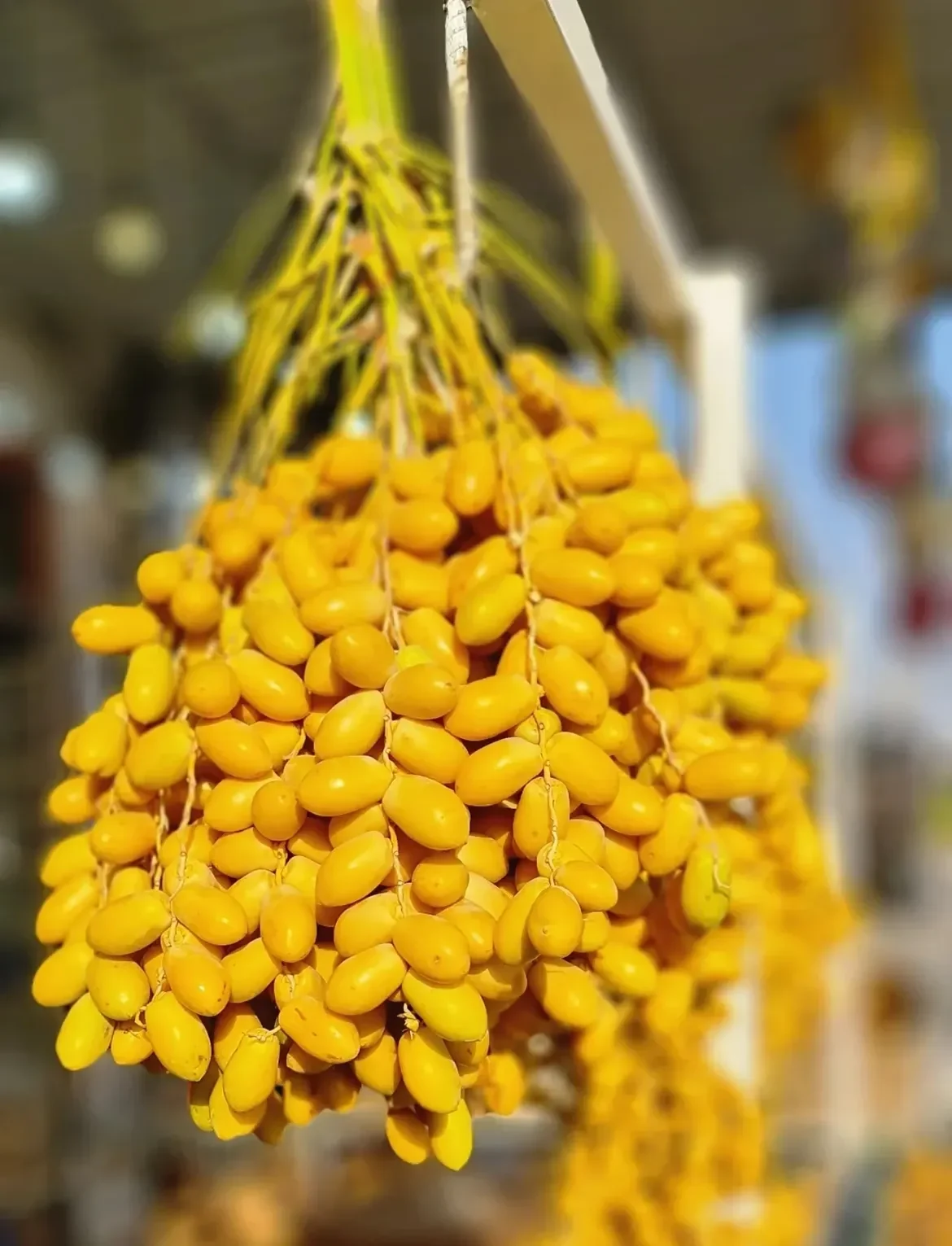
Haj Bagheri Kharak fruit के इसी specific stage पर आधारित है।
इसकी identity conventional soft date बनने का इंतज़ार करने पर नहीं है।
Point यह है कि fruit को तब experience किया जाए जब उसकी defining characteristics मौजूद हों:
bright yellow colour, firm flesh, freshness और distinctive crisp bite.
इसीलिए harvest stage इतना महत्वपूर्ण है।
बहुत जल्दी harvest करें तो sensory balance शायद अभी सही न हो।
बहुत देर wait करें तो fruit Rutab की ओर बढ़ने लगता है।
Softening स्वयं defect नहीं है।
यह natural ripening है।
लेकिन जैसे transition आगे बढ़ता है, product वही Kharak character express नहीं करता।
Haj Bagheri Kharak के लिए crispness केवल quality specification नहीं; product identity का हिस्सा है।
क्या Kharak fully ripened date से अधिक या कम मीठा होता है?
Date fruit ripening के साथ sweetness perception सामान्यतः बदलती है।
Studies ने reducing sugars और total soluble solids में full ripeness की ओर वृद्धि और moisture में कमी दिखाई है। [2][3]
यह समझाने में मदद करता है कि fully ripened date अक्सर अधिक intensely sweet और concentrated क्यों लगता है।
Kharak distinctly sweet हो सकता है।
लेकिन उसका sensory profile अलग है।
Fruit में अधिक water, firmer cellular structure, sugars का specific balance और astringent compounds—all sweetness perception को प्रभावित करते हैं।
इसीलिए दो fruits की तुलना केवल यह पूछकर नहीं की जा सकती:
“किसमें अधिक sugar है?”
Eating experience chemistry और structure का combination है।
Crisp yellow Kharak और soft brown date mouth में अलग interact करते हैं, भले दोनों same species के naturally sweet fruits हों।
Kharak का nutritional value क्या है?
ऐसी कोई single scientifically reliable nutrition table नहीं है जो हर Kharak variety को accurately represent करे।
यह महत्वपूर्ण है क्योंकि अनेक online articles “Kharak calories” के लिए एक number publish करते हैं और उसे ऐसे repeat करते हैं जैसे हर cultivar, growing region और maturity stage chemically identical हो।
वे identical नहीं हैं।
Scientific studies दिखाती हैं कि date fruit composition cultivar और maturity stage के अनुसार बदलती है। Moisture, soluble solids, sugars, proteins और mineral concentrations ripening के दौरान बदल सकते हैं, और different cultivars different patterns follow कर सकते हैं। [2][3]
इसलिए एक cultivar का nutrition analysis automatically Haj Bagheri Kharak या Iran के हर yellow Kharak की exact composition के रूप में present नहीं होना चाहिए।
Broadly, date fruit का principal macronutrient carbohydrate है और यह dietary fiber तथा naturally occurring minerals और phytochemicals भी देता है।
Kharak/Khalal stage पर balance fully ripened Tamr date से अलग होता है क्योंकि fruit biochemical development के अलग stage पर है।
क्या Kharak में natural sugar होती है?
हाँ।
Kharak naturally sweet fruit है और sugars contain करता है।
लेकिन sugar composition और concentration ripening के दौरान बदलते हैं।
Iranian date cultivars पर research में full ripeness की ओर reducing sugars और total soluble solids बढ़े और moisture घटी। [2][3]
इसलिए Kharak को “sugar-free” कहना या यह मानना misleading है कि firm होने के कारण इसका carbohydrate intake पर प्रभाव नहीं है।
क्या Kharak में fiber होता है?
Date fruit generally की तरह Kharak whole fruit से जुड़ा structural plant material contain करता है।
लेकिन exact fiber content ideally specific cultivar और product के laboratory analysis से report होना चाहिए।
इसी कारण BAGHERI यह सही नहीं मानता कि unrelated Medjool nutrition table copy करके Haj Bagheri Kharak की nutritional profile के रूप में प्रस्तुत कर दी जाए।
Real product को real data चाहिए।
क्या Kharak में antioxidant compounds होते हैं?
Nine Iranian date cultivars पर research में Khalal stage के fruits ने लगभग सभी studied cultivars में later Tamr stage की तुलना में higher phenolic compounds और antioxidant capacity दिखाई। [3]
यह scientifically interesting है।
लेकिन interpretation सही होनी चाहिए।
Laboratory antioxidant capacity का measurement यह नहीं बताता कि Kharak किसी specific disease को prevent या treat करता है।
यह बताता है कि fruit development stage phytochemical profile को influence कर सकती है।
यह अधिक defensible और useful statement है।
Kharak में कितनी calories होती हैं?
Honest answer है:
Calorie content specific cultivar और fruit composition पर निर्भर करता है।
“एक Kharak में 25 calories” जैसा universal figure convenient लग सकता है, लेकिन fruit size बदलता है।
Small और large fruits exact same energy नहीं देते।
Moisture और carbohydrate concentration भी maturity के साथ बदलते हैं।
Product-specific laboratory analysis के बिना एक Haj Bagheri Kharak के लिए exact calorie figure को universal scientific fact की तरह state नहीं करना चाहिए।
Energy या carbohydrate intake monitor करने वालों के लिए actual product की measured nutrition information सबसे reliable होगी जब वह उपलब्ध हो।
यह किसी दूसरे website से copied confident number जितना dramatic नहीं हो सकता।
लेकिन यह अधिक honest है।
Kharak के संभावित nutritional benefits क्या हैं?
Kharak whole fruit है।
इसके realistic nutritional value को उसी context में discuss करना चाहिए।
यह natural carbohydrates और इसलिए dietary energy देता है। Date fruit होने के कारण इसमें plant-derived compounds और structural components भी होते हैं जो refined table sugar में नहीं होते।
Date fruit research ने ripening stages के बीच sugars, phenolic compounds और antioxidant capacity सहित biochemical characteristics में significant differences दिखाए हैं। [3][4]
लेकिन Kharak को medicine की तरह market नहीं करना चाहिए।
“Kharak Alzheimer's रोकता है”, “anemia treat करता है”, “blood vessels खोलता है”, “muscle बनाता है” या “infertility treat करता है” जैसे claims के लिए specific clinical evidence चाहिए।
Simple nutritional story पहले से strong है।
Kharak naturally sweet, whole date-palm fruit है जिसे maturity के एक distinctive stage पर खाया जाता है।
Value समझाने के लिए इसे pharmaceutical product बनाना आवश्यक नहीं है।
क्या Kharak diabetes वाले लोगों के लिए suitable है?
Kharak natural sugars और carbohydrates contain करता है।
इसीलिए इसे automatically “diabetic sugar substitute” की तरह market नहीं करना चाहिए।
Food की metabolic response amount eaten, total carbohydrate load, individual और बाकी meal पर निर्भर करती है।
एक cultivar या maturity stage का data भी हर Kharak product पर automatically apply नहीं किया जा सकता क्योंकि ripening और cultivar chemical composition को influence करते हैं।
People with diabetes individually planned diets में अलग fruits include कर सकते हैं, लेकिन appropriate quantity personal medical और nutrition question है।
Responsible date producer को promise नहीं करना चाहिए कि Kharak blood sugar lower करता है।
और यह भी नहीं कहना चाहिए कि sugar “natural” है इसलिए unlimited quantities ठीक हैं।
Natural sugar भी carbohydrate है।
क्या Kharak weight loss में मदद करता है?
कोई एक fruit अपने आप weight loss नहीं कराता।
इसी प्रकार Kharak में special fat-burning ability नहीं है।
Appropriately planned diet में whole-fruit snack के रूप में इस्तेमाल हो सकता है, लेकिन total energy intake important रहती है।
यह कहना कि fiber होने के कारण Kharak automatically weight loss करता है oversimplification है।
वहीं यह कहना कि sweet होने के कारण Kharak inevitably weight gain करेगा, वह भी बहुत simplistic है।
Amount matters.
बाकी diet matters.
Person की energy needs matter।
Nutrition अक्सर तब बेहतर नहीं होती जब हम एक exaggerated claim को दूसरे exaggerated claim से replace कर दें।
Kharak खाने के side effects हैं?
Most people के लिए Kharak simply food है।
लेकिन किसी भी carbohydrate-rich fruit की large quantity total calorie और carbohydrate intake को काफी बढ़ा सकती है।
कुछ लोगों को certain fruits या dietary fiber intake में तेजी से change होने पर gastrointestinal discomfort हो सकता है।
जिन लोगों को medically carbohydrate या potassium intake monitor करना पड़ता है, उन्हें overall diet को देखना चाहिए और professional advice follow करनी चाहिए।
Traditional “hot” और “cold” food concepts तथा nutrition science के बीच फर्क रखना भी important है।
Traditional dietary systems cultural history का हिस्सा हैं और traditional beliefs के रूप में discuss किए जा सकते हैं।
लेकिन उन्हें automatically proven biomedical mechanisms की तरह present नहीं करना चाहिए।
उदाहरण के लिए excessive Kharak सीधे acne, mouth ulcers या “heat in the blood” cause करता है—ऐसे claims को appropriate evidence के बिना scientific fact नहीं कहना चाहिए।
Fresh Kharak fully ripened dates से handle करना अधिक कठिन क्यों है?
Kharak की postharvest challenge कई semi-dry या dry dates से अलग है।
यह freshness और crispness के लिए sold होता है।
जो qualities इसे attractive बनाती हैं वही handling को more demanding भी बनाती हैं।
Mature firm stage तक पहुँचने के बाद भी fruit biological और biochemical change जारी रखता है। Ripening progress के साथ softening और colour change fruit को Rutab की ओर ले जा सकते हैं।
इसलिए harvest stage, temperature और storage conditions महत्वपूर्ण हैं।
Date ripening research दिखाती है कि firm stage से Rutab की ओर transition active physiological process है और postharvest conditions ripening behaviour को affect कर सकती हैं। [2][5][6]
International buyers के लिए इसका अर्थ है कि Kharak को automatically conventional dried date की तरह treat नहीं किया जाना चाहिए।
Supply-chain question अलग है।
Dry या semi-dry dates में priority long-term stability हो सकती है।
Kharak में objective है precise maturity stage पर fresh, crisp fruit की characteristics को protect करना।
Kharak को कैसे store करना चाहिए?
Fresh Kharak को unnecessary heat और quality loss accelerate करने वाली conditions से बचाना चाहिए।
Household consumption के लिए refrigeration आमतौर पर लंबे समय तक warm environment में छोड़ने से अधिक appropriate है।
Fruit को clean और suitable food-grade packaging में protected रखना चाहिए।
Consumers को यह भी समझना चाहिए कि gradual colour या texture change continued ripening हो सकता है।
Yellow Kharak पर soft brown area develop होना Rutab की ओर movement का संकेत हो सकता है।
यह automatically decay नहीं है।
लेकिन abnormal fermentation odours, visible mould या deterioration के signs को normal ripening समझना गलत है।
Commercial storage और international transport में temperature management, packaging, hygiene और product-specific shelf-life validation simple household rule से कहीं अधिक महत्वपूर्ण हैं।
Fresh Kharak कैसे चुनें?
Good Kharak को पहले उसी के intended character के आधार पर judge करना चाहिए।
Haj Bagheri Kharak जैसे product में expected character bright yellow fruit, firm flesh और crisp bite है।
Freshness केवल colour से determine नहीं होती।
Fruit को इन points पर भी देखना चाहिए:
- appropriate firmness;
- overall skin condition;
- mechanical damage के signs;
- abnormal softening;
- off-odours;
- visible mould;
- और product specification के अनुसार consistency।
Natural variation की थोड़ी मात्रा expected है।
Dates palms पर grow करते हैं।
वे biological products हैं, एक mould से निकले plastic objects नहीं।
Same orchard के fruit में भी size, shape और subtle colour differences हो सकते हैं।
Grading का उद्देश्य यह pretend करना नहीं कि nature identical objects बनाती है।
Objective है required commercial और sensory quality express करने वाले fruits select करना।
Kharak का season कब होता है?
Kharak harvest timing से closely connected है क्योंकि stage itself temporary है।
Exact harvest period geography, cultivar और seasonal conditions के अनुसार बदलती है।
इसलिए “हर Kharak August में harvest होता है” जैसा statement international scientific article के लिए बहुत broad है।
Southern Iran में Kharak hot-season date harvest calendar का हिस्सा है।
लेकिन exact window cultivar और location specific है।
Central fact simple है:
Kharak का season है क्योंकि Kharak एक stage है।
Fruit को ripen होने दें और वह बदल जाता है।
Yellow fruit transition शुरू करता है।
Firmness घटती है।
Rutab दिखाई देता है।
Product कुछ और बन जाता है।
यह temporary nature Kharak की value का हिस्सा है।
क्या Kharak export किया जा सकता है?
हाँ—लेकिन commercial logic semi-dry या fully ripened date जैसी नहीं है।
Kharak freshness, firmness और crispness के लिए valued है। ये characteristics time-sensitive हैं। इसलिए buyer को harvest stage, pre-cooling या temperature management, food-grade packaging, transit time और product-specific shelf-life validation पर विचार करना चाहिए।
Fresh Khalal dates पर postharvest research दिखाती है कि temperature और packaging treatments ripening, firmness और shelf life पर material effect डाल सकते हैं। [5][6]
BAGHERI के लिए international Kharak enquiry practical questions से शुरू होनी चाहिए:
- destination country;
- expected transit route;
- arrival पर required condition;
- retail या wholesale format;
- estimated quantity;
- buyer की cold-chain capabilities।
Kharak exportable है। लेकिन इसे ordinary dried date की तरह quote नहीं किया जाना चाहिए।
International buyers को “Kharak” शब्द क्यों समझना चाहिए?
Southern Iranian date culture से unfamiliar international buyer के लिए Kharak पहले cultivar name जैसा दिख सकता है।
इससे confusion हो सकती है।
Kharak primarily date fruit के एक stage और eating style को describe करता है, कोई single universal cultivar नहीं।
Different date palms coloured firm Khalal/Kharak-like stage से गुजरते हैं।
लेकिन केवल कुछ fruits उस point पर direct consumption के लिए desirable होते हैं।
यह distinction लगभग हर commercial question को affect करती है:
texture,
colour specification,
harvest timing,
ripening tolerance,
cold-chain expectations,
packaging,
shelf-life assessment,
और consumer education।
Soft conventional date expect करने वाला buyer firm Kharak को “hard” समझकर गलत judge कर सकता है।
Highly concentrated Tamr sweetness expect करने वाला consumer lighter flavour को misunderstand कर सकता है।
Continued ripening से unfamiliar retailer Rutab की transition recognize नहीं कर सकता।
Product knowledge product evaluation बदलती है।
Kharak गलती से जल्दी harvest किया गया date नहीं है
शायद Kharak को explain करने का simplest तरीका यह बताना है कि वह क्या नहीं है।
यह defective soft date नहीं है।
यह ऐसा date नहीं जो ripen होने में fail हुआ।
और good Kharak वह fruit नहीं जो impatient grower ने जल्दी तोड़ लिया।
Kharak precise maturity stage की characteristics के लिए selected होता है।
उसका colour उस stage का है।
उसकी firmness उस stage की है।
उसकी crunch उस stage की है।
Mild astringency भी sensory identity का हिस्सा हो सकती है।
बाद में same biological process softer fruit बनाती है।
किसी stage को दूसरे की copy बनने की ज़रूरत नहीं।
Haj Bagheri Kharak: फल के जीवन के एक क्षण की value
Dashtestan में date palm एक unchanging product नहीं बनाता।
Southern sun के नीचे fruit बदलता है।
Green yellow बनता है।
Firm flesh soften होना शुरू करती है।
पहले darker areas दिखाई देते हैं।
Kharak Rutab की ओर बढ़ता है।
Rutab mature date की ओर जाता है।
Date-growing regions से दूर रहने वाले लोगों को ये supermarket shelf पर अलग products लग सकते हैं।
Grower के लिए ये same fruit life के अलग moments हैं।
Haj Bagheri Kharak उन्हीं moments में से एक का product है।
Value fruit को yellow, firm और crisp होने पर harvest करने में है।
Extensive softening से पहले।
Later date stage के dark character के dominate करने से पहले।
Crunch गायब होने से पहले।
इसीलिए Kharak को समझना palm को समझने से शुरू होता है।
Product केवल sweetness से define नहीं होता।
यह timing से define होता है।
और date growing में timing Kharak, Rutab और date के बीच फर्क हो सकती है।
Kharak के बारे में अक्सर पूछे जाने वाले प्रश्न
Kharak क्या है?
Kharak local term है जो date fruit के firm, fully coloured और crisp stage के लिए इस्तेमाल होती है और international date terminology में Khalal से closely associated है। इसे soft Rutab और later Tamr stage से पहले harvest किया जाता है।
क्या Kharak unripe date है?
Kharak को “unripe” कहना oversimplification है। Khalal stage को वैज्ञानिक रूप से generally mature, firm और fully coloured stage कहा जाता है। Green Kimri truly immature stage है।
क्या Kharak और Khalal same हैं?
BAGHERI Dashtestan के fresh, firm और crisp stage के लिए local word Kharak इस्तेमाल करता है। International date science में closest widely used maturity term Khalal है। Regional vocabulary vary करती है, इसलिए दोनों words को context के साथ connect करना चाहिए, हर country में universal synonyms मानना नहीं।
क्या Kharak export हो सकता है?
हाँ, लेकिन handling discussion semi-dry या dry dates से अलग है। Temperature management, transit time, packaging और product-specific shelf-life validation important हैं क्योंकि Kharak firmness और freshness के लिए sold होता है।
Kharak hard और crunchy क्यों है?
Firm texture इस maturity stage पर fruit structure reflect करती है। Further ripening में cell-wall-modifying enzyme activity में changes fruit softening के साथ coincide करती हैं।
Kharak astringent क्यों लगता है?
Soluble tannins dry, mouth-tightening sensation में contribute करते हैं। Tannin levels और astringency cultivars के बीच vary करती हैं और decide करती हैं कि Khalal stage पर fruit pleasant है या नहीं।
क्या हर yellow date अच्छा Kharak है?
नहीं। Cultivar characteristics significantly अलग होती हैं। कुछ fruits firm stage पर बहुत astringent रहते हैं या desirable sensory balance develop नहीं करते।
क्या Kharak sweet है?
हाँ, edible Kharak naturally sweet हो सकता है। लेकिन maturity stage moisture, sugars, structure और astringency को affect करती है, इसलिए sweetness fully ripened date से अलग experience होती है।
क्या Kharak Rutab बनता है?
हाँ। Ripening progress के साथ firm Kharak soften और darken होना शुरू कर सकता है और Rutab stage की ओर बढ़ता है।
क्या Rutab fully ripened date बनता है?
Further ripening के साथ fruit Tamr stage की ओर progress करता है। Exact ripening behaviour और final texture cultivar पर depend करते हैं।
Kharak कैसे store करना चाहिए?
Fresh Kharak को unnecessary heat से protect कर household storage में suitable refrigerated conditions में रखना बेहतर है। Commercial storage और export में product-specific temperature, packaging और shelf-life management चाहिए।
क्या Haj Bagheri Kharak soft date है?
नहीं। Haj Bagheri Kharak yellow colour, firm flesh और crisp eating character से define होता है।
फल को एक से अधिक stages में समझना चाहिए
International date market अक्सर box के अंदर brown, soft fruit से शुरू होता है।
लेकिन date का life उस box से बहुत पहले शुरू हो जाता है।
Dates को properly समझने के लिए palm को देखना और fruit को बदलते हुए follow करना आवश्यक है।
Kimri.
Kharak.
Rutab.
Tamr.
हर stage का अलग texture और time के साथ अलग relationship है।
International consumers के लिए Kharak इन stages में शायद least familiar है।
शायद इसी कारण यह better explanation deserve करता है।
यह अधूरा date नहीं है।
यह date fruit के life के एक precise moment की complete expression है।
संदर्भ और वैज्ञानिक स्रोत
[1] Food and Agriculture Organization of the United Nations. Date Palm Products — Chapter 1: The Date Fruit. FAO Agricultural Services Bulletin 101. यह chapter commonly used Kimri, Khalal, Rutab और Tamr stages describe करता है।
[2] Rastegar S, Rahemi M, Baghizadeh A, Gholami M. Enzyme activity and biochemical changes of three date palm cultivars with different softening pattern during ripening. Food Chemistry. 2012;134(3):1279–1286. doi:10.1016/j.foodchem.2012.02.208.
[3] Mortazavi SMH, Azizollahi F, Moallemi N. Some Quality Attributes and Biochemical Properties of Nine Iranian Date (Phoenix dactylifera L.) Cultivars at Different Stages of Fruit Development. International Journal of Horticultural Science and Technology. 2015;2(2):161–171. doi:10.22059/ijhst.2015.56433.
[4] Shahdadi F, Mirzaei HO, Daraei Garmakhany A. Study of phenolic compound and antioxidant activity of date fruit as a function of ripening stages and drying process. Journal of Food Science and Technology. 2015;52:1814–1819. doi:10.1007/s13197-013-1177-6.
[5] Abdelkarim DO, et al. Extending the Shelf Life of Fresh Khalal Barhi Dates via Controlled Postharvest Treatments. 2022. Fresh Khalal fruit की firmness, ripening और storage behaviour पर research।
[6] Kader AA. Date — Produce Facts Sheet. Postharvest Research and Extension Center, University of California, Davis. Khalal, Rutab और Tamr dates के maturity, quality और postharvest handling guidance।
संपादकीय नोट
यह article product education और general scientific information के लिए है। Date terminology, cultivar behaviour और postharvest performance region और variety के अनुसार बदल सकते हैं। BAGHERI Kharak शब्द का उपयोग Dashtestan में परिचित fresh, firm और crisp stage के लिए करता है और unrelated cultivar data को Haj Bagheri Kharak का product-specific laboratory data प्रस्तुत नहीं करता।
— BAGHERI | Dashtestan से Date Knowledge
HAJ BAGHERI KHARAK