DATE KNOWLEDGE · KHARAK
What Is Kharak? Understanding the Crisp Yellow Stage of Date Fruit
Kharak is not a failed soft date. It is the mature, fully coloured and still-crisp stage of the fruit — a temporary eating experience defined by timing.
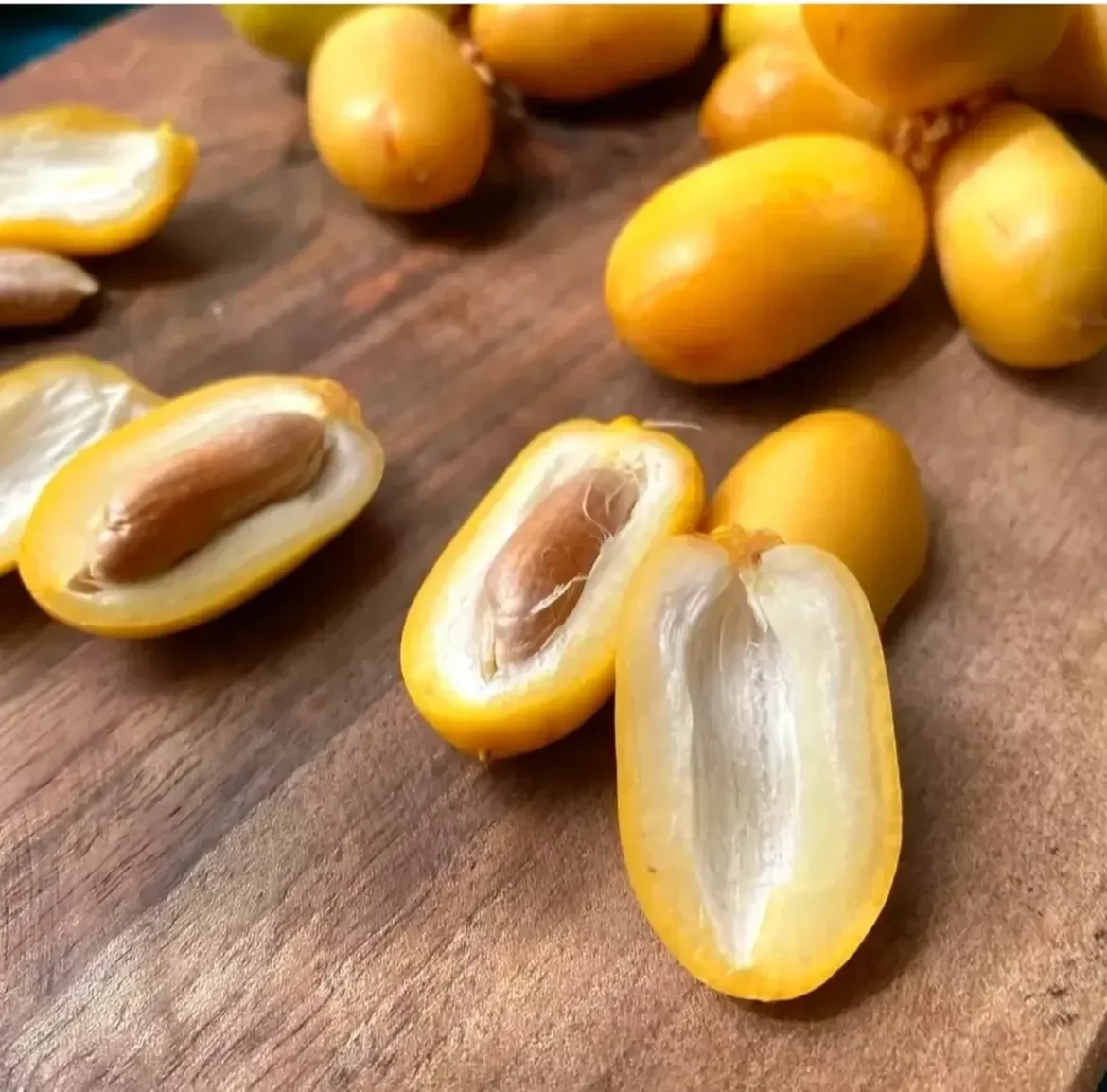
Kharak is often described simply as an “unripe date.”
That description is convenient, but scientifically it is incomplete.
A green date fruit at the beginning of its development is immature. Kharak, by contrast, is generally associated with the mature, firm and fully coloured stage of the fruit — the stage more widely described in international date science as Khalal or Bisr.
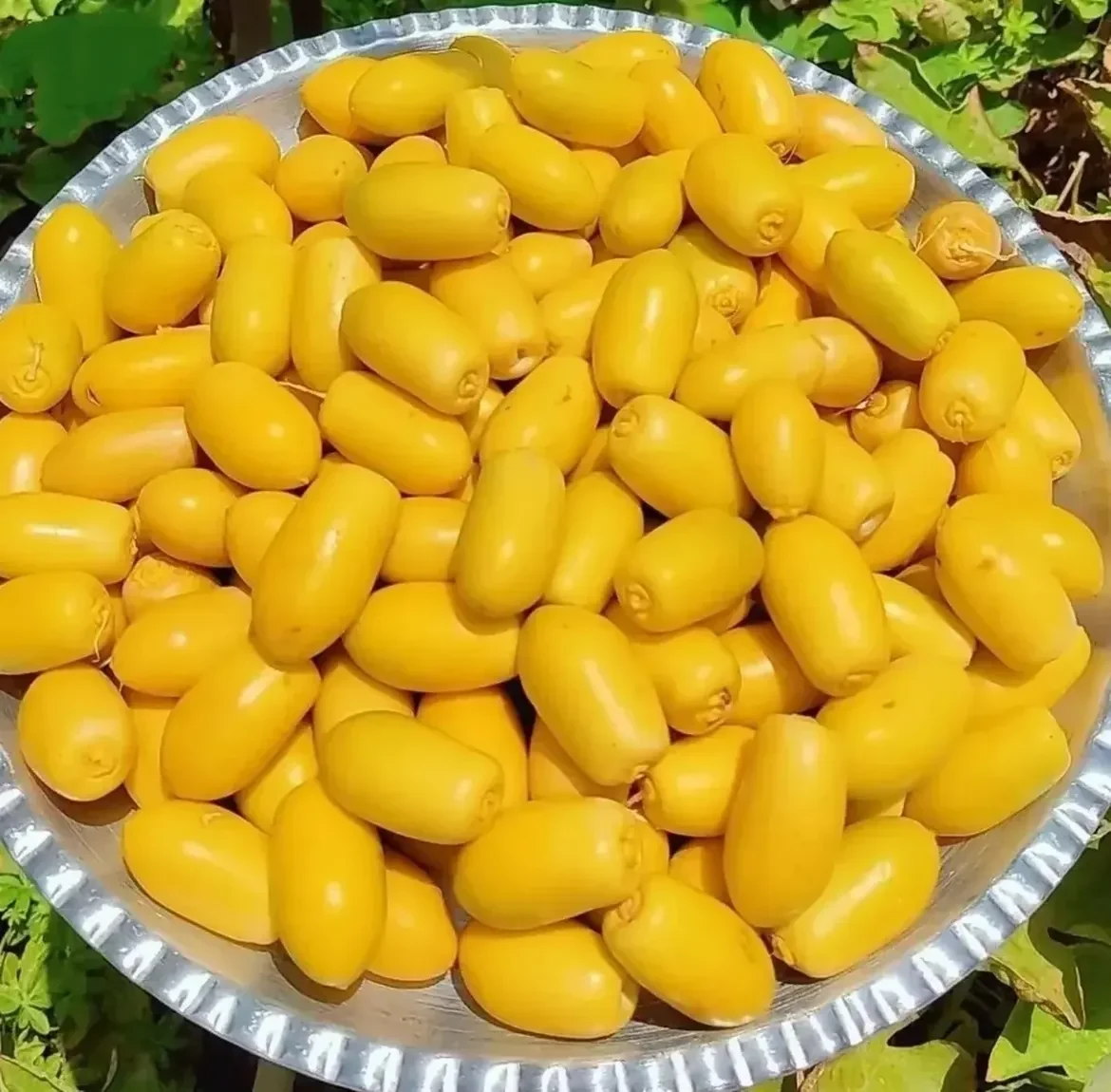
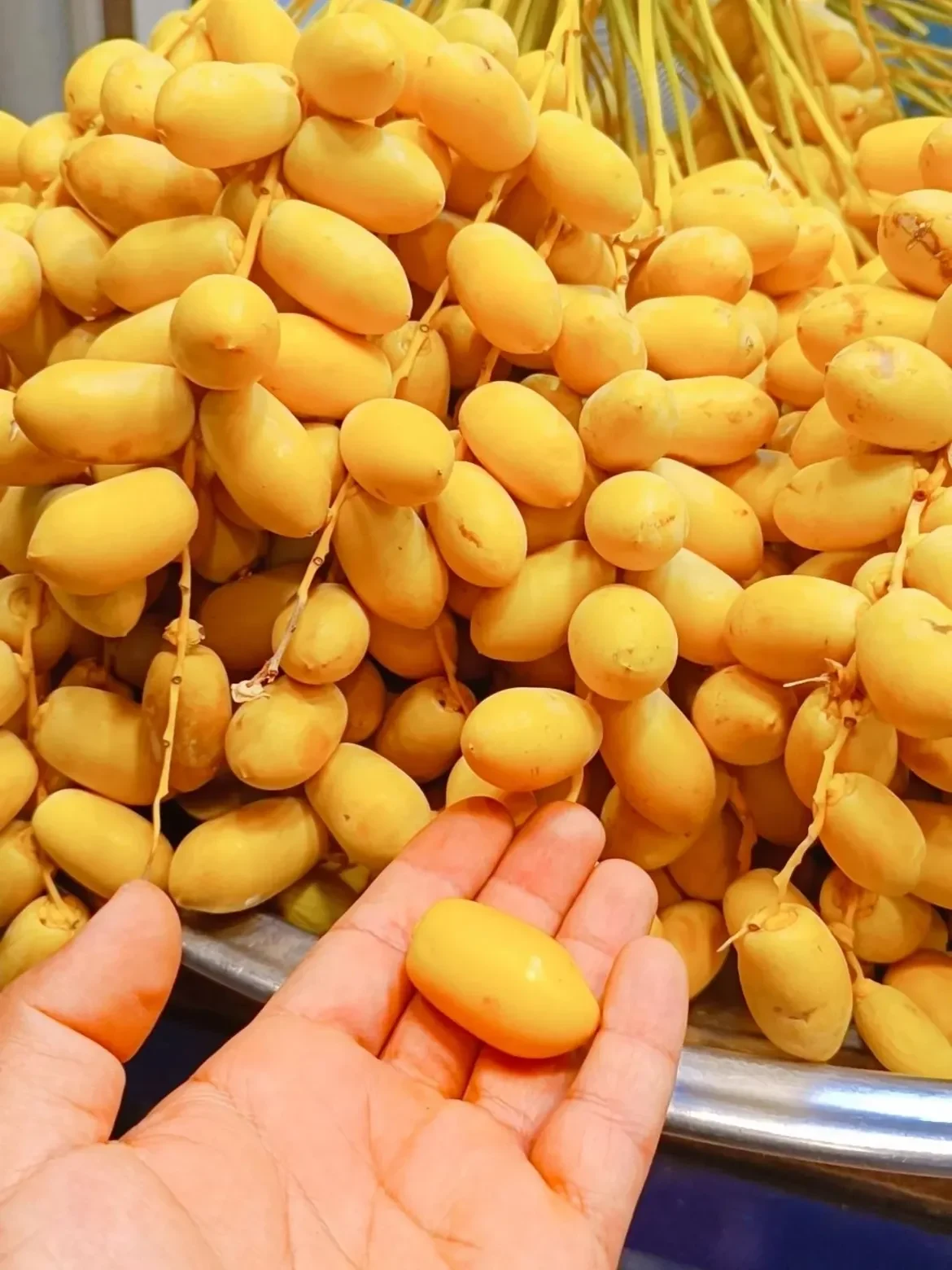
At this point, the fruit has already passed through much of its physical development. It may have reached a bright yellow, golden, orange or red colour, depending on the cultivar. Its flesh remains firm. The skin is comparatively smooth and tight. The bite is crisp.
It does not yet have the soft, dark and yielding texture that many international consumers automatically associate with dates.
And that is precisely the point.
Kharak is not a failed version of a soft date. It is the date fruit at a different moment of maturity.
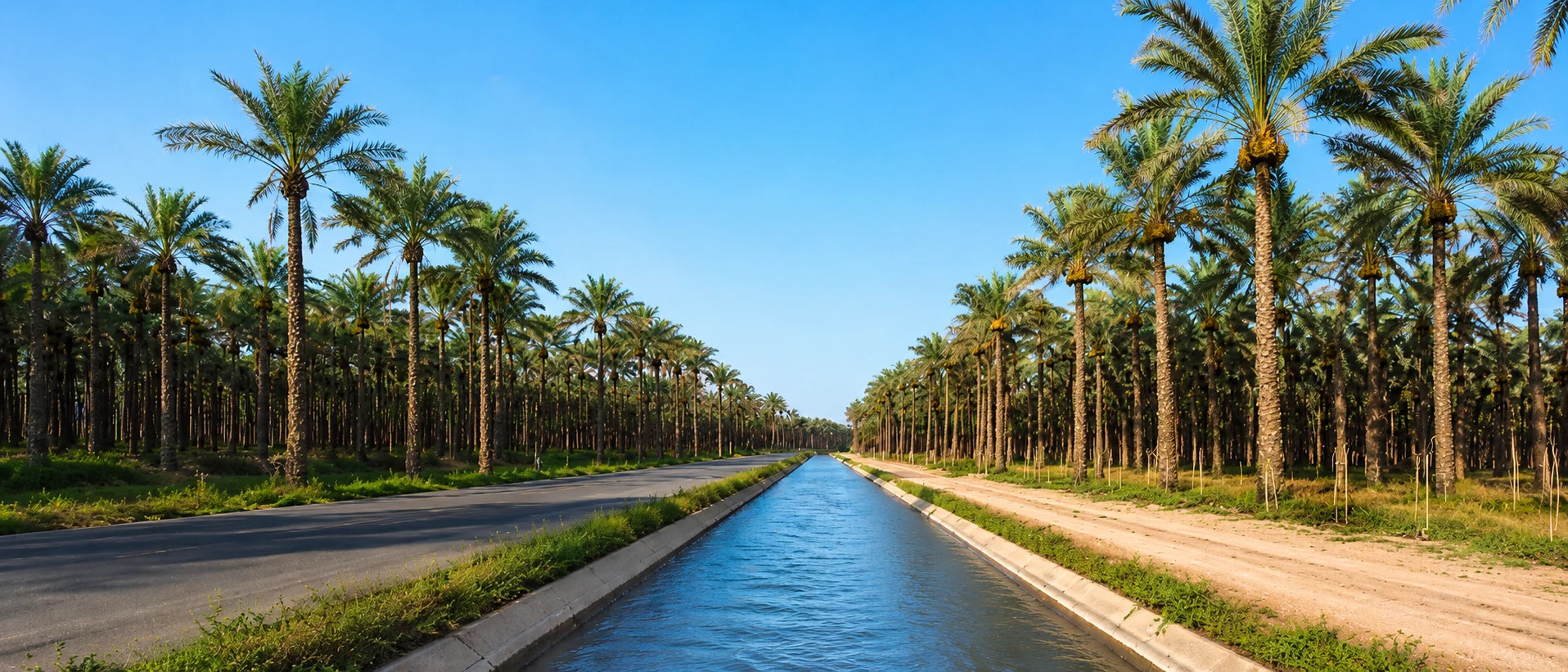
In southern Iran, where date palms are part of agricultural life rather than simply a packaged food category, this distinction is familiar. Growers recognise the changing fruit not only by colour, but by touch, flavour, firmness and the way it responds during harvest.
Kharak, Rutab and fully ripened dates may come from the same palm.
But they are not the same eating experience.
Kharak at a glance
Kharak is the mature, fully coloured and still-firm stage of date fruit commonly associated with the Khalal stage in international date terminology. It is eaten before the fruit softens into Rutab and later reaches the fully ripened Tamr stage. The defining commercial and sensory characteristics are colour, firmness, crispness and harvest timing — not simply the fact that the fruit is “yellow.”
Kharak, Khalal and Bisr: A Note on Terminology
Date vocabulary changes across countries and date-growing regions.
International scientific and postharvest literature commonly uses Khalal for the mature, fully coloured and firm stage. Some Arabic-speaking regions also use Bisr for a comparable coloured, crisp stage.
In southern Iran, Kharak is the familiar local word used for the fruit eaten before it softens into Rutab.
These words are not always used with perfect one-to-one consistency across every region or cultivar. For BAGHERI, the practical rule is simple:
we use Kharak for the fresh, firm and crisp stage familiar in Dashtestan, and we explain its relationship to Khalal so international buyers can understand the product without erasing the local word.
From Green Fruit to Kharak, Rutab and Date
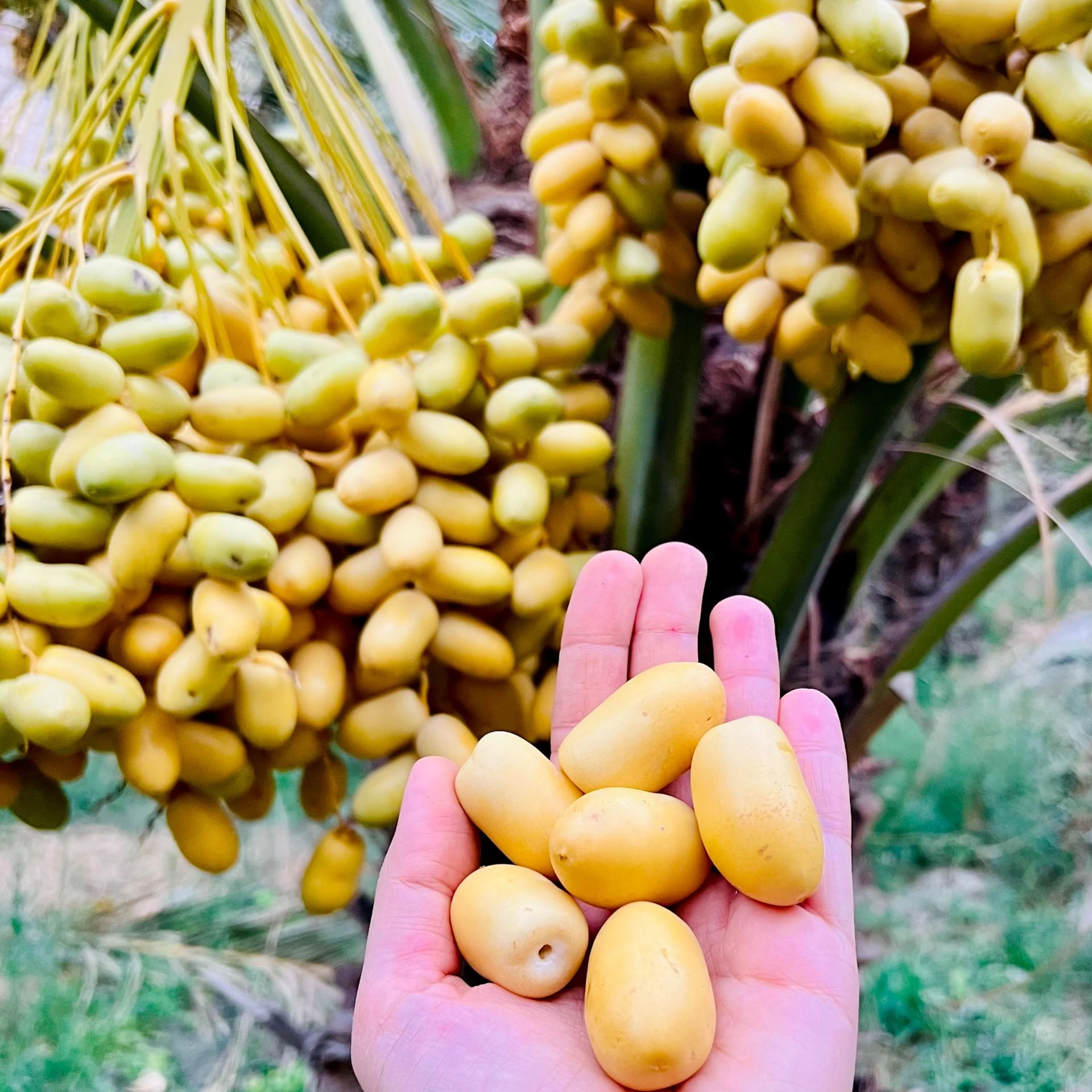
To understand Kharak, it helps to follow the fruit through ripening.
Scientific literature commonly describes several developmental stages in date fruit. The terminology can vary slightly between regions, but the sequence generally includes Kimri, Khalal, Rutab and Tamr during the later development and ripening of the fruit. [1]
| Stage | Typical appearance | Texture | Practical eating context |
|---|---|---|---|
| Kimri | Green, developing fruit | Very firm | Generally immature |
| Khalal / Kharak | Fully coloured; often yellow, golden or red | Firm and crisp | Fresh eating for suitable cultivars |
| Rutab | Partial to extensive browning | Softening and tender | Fresh, soft date stage |
| Tamr | Darker, fully ripened fruit | Soft, semi-dry or dry depending on cultivar | The stage most international consumers recognise as a date |
The table is a practical guide, not a claim that every cultivar changes at exactly the same speed or finishes with the same texture.
Kimri: the immature green stage
At the Kimri stage, the date fruit is still green and developing.
The fruit increases in size and undergoes important structural and biochemical development. It is generally firm and, for most cultivars, not considered an eating stage.
This is the stage that can more accurately be described as immature.
Khalal or Kharak: mature, coloured and crisp
The next major stage is Khalal.
In southern Iran, Kharak is closely associated with this firm, coloured stage of the fruit. English transliterations vary, but BAGHERI uses the spelling Kharak.
The fruit is no longer green.
Depending on the palm cultivar, its skin may become yellow, golden or red. The flesh is firm and the fruit can produce a clean, audible crunch when bitten.
In date science, Khalal fruit is described as mature, full-coloured, firm and crisp. Whether the fruit is pleasant to eat at this stage depends strongly on the cultivar and, among other factors, the level of soluble tannins responsible for astringency.
This explains something that date growers have understood for generations:
not every date variety makes good Kharak.
Rutab: the beginning of softness
Ripening does not stop at Kharak.
As the fruit progresses toward Rutab, visible and structural changes begin.
A section of the fruit may start to darken. The flesh becomes softer. Moisture distribution and sugar composition change. The cell wall begins to lose some of the structural characteristics responsible for the firm Kharak bite.
Research on Iranian date cultivars has shown that the activity of several cell-wall-modifying enzymes increases during ripening and that these changes coincide with fruit softening. [2]
For the consumer, the science can be felt immediately.
The crisp snap begins to disappear.
The fruit becomes tender.
The eating experience changes from something almost apple-like in its physical resistance to something softer, richer and more characteristically associated with fresh dates.
This is Rutab.
Tamr: the fully ripened date stage
With further ripening, the fruit moves toward the Tamr stage — the form most international consumers simply call a “date.”
Moisture continues to decrease and soluble solids become more concentrated. In research on Iranian cultivars, reducing sugars and total soluble solids generally increased during ripening, while moisture decreased. The precise pattern, however, differed significantly between cultivars. [2][3]
The fruit becomes darker and its flavour more concentrated.
Depending on the variety, a Tamr-stage date may remain soft, become semi-dry or develop a firmer, raisin-like character.
This is an important point for anyone buying dates internationally:
“Date” is not one texture.
The cultivar matters.
The origin matters.
And the stage of maturity matters.
So, Is Kharak an Unripe Date?
In everyday language, people sometimes call Kharak an unripe date because it is harvested before the soft Rutab and fully ripened Tamr stages.
But scientifically, this wording needs care.
At the Khalal stage, the fruit is generally considered physiologically mature and fully coloured. It is not the same as the immature green Kimri fruit. Studies and postharvest research describe Khalal fruit as mature, fully coloured, firm and crisp. [1][6]
A better explanation is this:
Kharak is a date fruit harvested and eaten at its mature, firm and crisp stage, before the fruit progresses into the softer Rutab and later Tamr stages.
This may sound like a small difference in terminology.
For growers and buyers, it is not.
Calling Kharak simply “unripe fruit” can make it sound as though it was harvested too early by mistake.
Good Kharak is the opposite.
Its harvest timing is intentional.
The exact stage is the product.
Why Is Kharak Crisp?
The characteristic crunch of Kharak is the result of fruit structure at this particular stage of maturity.
As fruit ripens, its cell walls change.
Research on Iranian date cultivars has examined enzymes including pectin methylesterase, β-galactosidase, endo-1,4-β-D-glucanase and cellulase. Increased activity of cell-wall-modifying enzymes during ripening was associated with fruit softening.
In simpler terms, the structure that helps Kharak feel hard and crisp gradually changes as the fruit ripens.
That is why a Kharak cannot remain Kharak forever under normal ripening conditions.
The same fruit can begin firm and brightly coloured, develop its first soft brown areas and eventually become substantially softer.
For someone standing in a date orchard, the transition is visible.
For a food scientist, it is biochemical.
For the consumer, it is texture.
All three are observing the same process.
Why Does Kharak Sometimes Taste Astringent?
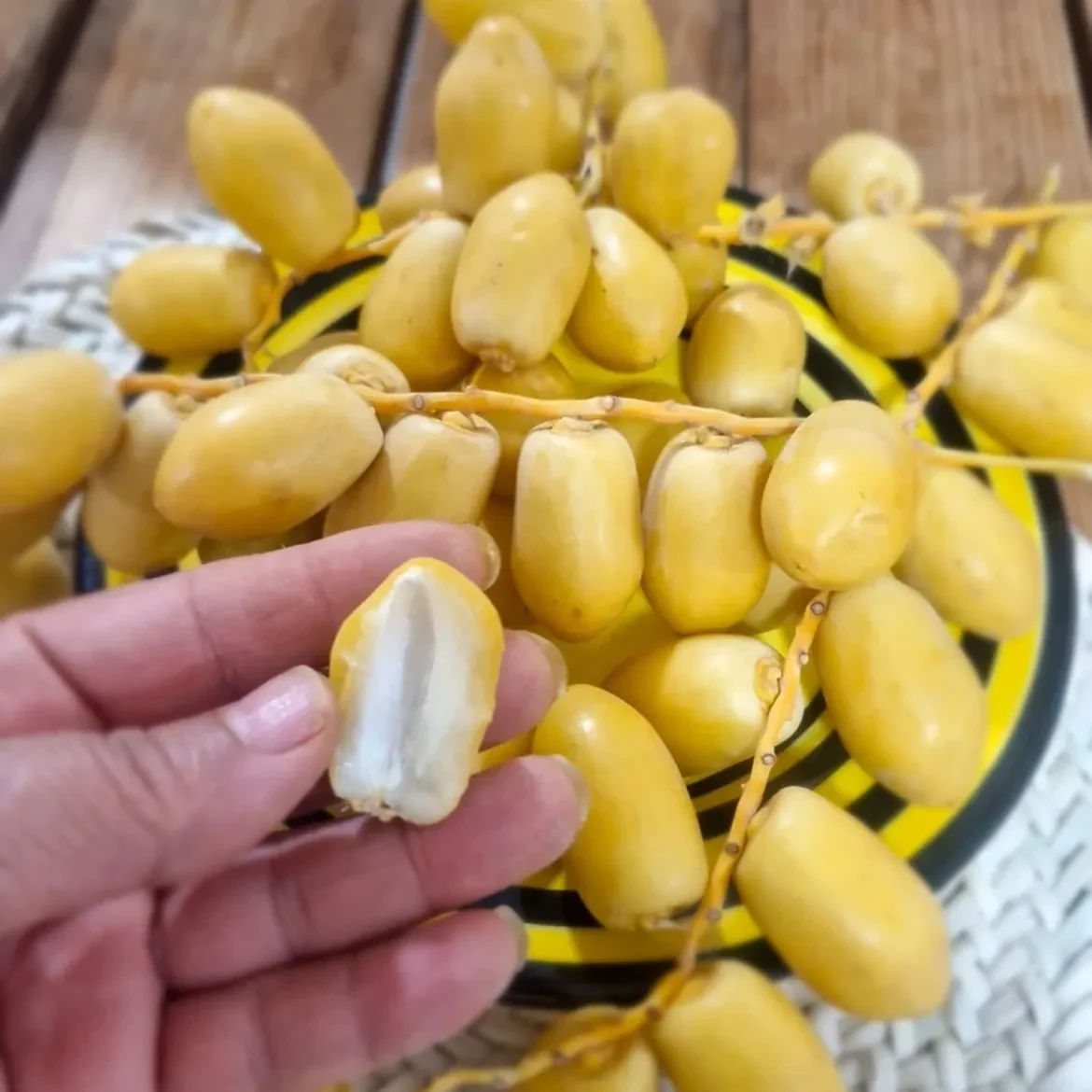
One of the most distinctive characteristics of Kharak is its possible astringency.
Astringency is not exactly bitterness.
It is the dry, tightening sensation that can develop in the mouth after eating certain fruits. Strong tea and some persimmons can create a comparable sensation.
In date fruit, soluble tannins play an important role in this characteristic. [1][6]
Research on date ripening has specifically identified high soluble tannin levels as a reason some cultivars remain strongly astringent at the firm Khalal stage.
As the fruit progresses through ripening, changes in these compounds can reduce the perception of astringency.
This is one reason why many date varieties are rarely eaten at the Kharak stage.
Their colour may look attractive.
Their texture may be crisp.
But their astringency can still be too strong for enjoyable fresh consumption.
Other cultivars, however, offer a far more attractive balance.
They retain the firmness and crunch of Kharak while developing sufficient sweetness and a more acceptable level of astringency.
These are the Kharak fruits people actively wait for each season.
Not Every Date Palm Produces Good Eating Kharak
This point deserves more attention.
There are hundreds of named date palm cultivars, and their fruits differ considerably in size, colour, shape, moisture, sugar composition, texture and ripening behaviour.
Research comparing cultivars repeatedly shows that chemical composition and the pattern of change during ripening are strongly influenced by both the cultivar and maturity stage. [2][3]
Therefore, it is inaccurate to assume that the yellow stage of every date variety will taste the same.
Some Kharak fruits may be intensely astringent.
Some may offer limited sweetness.
Others develop a much more attractive balance of sweetness, freshness and crunch.
This is similar to other fruits.
Not every grape is ideal as a table grape.
Not every apple is selected for eating fresh.
Not every olive is enjoyed directly from the tree.
The biological species may be the same, but cultivar characteristics determine the eating experience.
Kharak should be understood in the same way.
What Does Kharak Taste Like?
Describing the flavour of Kharak to someone who has only eaten soft dates can be difficult.
The first surprise is usually the texture.
A good fresh Kharak is firm.
The bite is clean.
The flesh resists the teeth before breaking with a distinct crunch.
Its flavour is normally lighter and fresher than that of a fully ripened date. Sweetness is present, but it may not have the heavy, concentrated perception associated with a dark semi-soft date.
Depending on cultivar and ripeness, there may also be a mild astringent finish.
People sometimes compare the sensory experience with elements of pear, crisp apple or sugar cane.
These comparisons are useful, but Kharak has its own identity.
It is still unmistakably the fruit of the date palm.
The important difference is that the fruit is being experienced before extensive softening and concentration associated with later ripening.
For someone expecting a sticky date, Kharak can be surprising.
For someone raised around the harvest season of southern Iran, that crunch is immediately familiar.
Kharak and Haj Bagheri Kharak
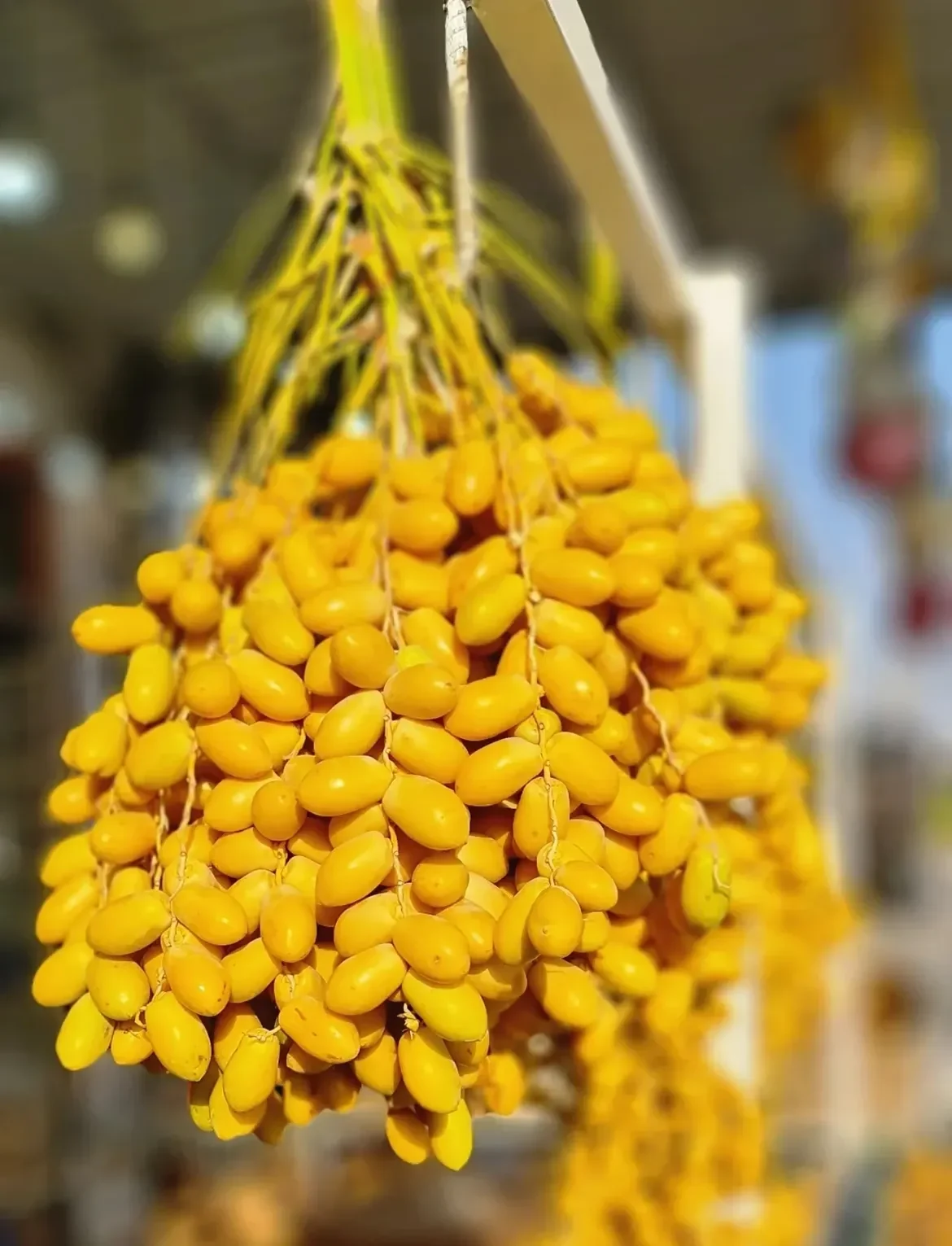
Haj Bagheri Kharak is built around this specific stage of the fruit.
Its identity is not based on waiting for the fruit to become a conventional soft date.
The point is to experience the fruit while its defining characteristics are still present:
bright yellow colour, firm flesh, freshness and a distinctive crisp bite.
This is why the stage of harvest matters so much.
Harvest too early and the sensory balance may not yet be right.
Wait too long and the fruit begins moving toward Rutab.
Softening is not necessarily a defect.
It is natural ripening.
But once that transition progresses, the product is no longer expressing the same Kharak character.
For Haj Bagheri Kharak, crispness is not merely a quality specification. It is part of the product's identity.
Is Kharak Sweeter or Less Sweet Than a Fully Ripened Date?
In general, the perception of sweetness changes as date fruit ripens.
Studies of date development have shown increases in reducing sugars and total soluble solids as fruits move toward full ripeness. At the same time, moisture generally decreases.
This combination helps explain why a fully ripened date often tastes more intensely sweet and concentrated.
Kharak can still be distinctly sweet.
But its sensory profile is different.
More water in the fruit, a firmer cellular structure, the particular balance of sugars and the presence of astringent compounds can all affect how sweetness is perceived.
This is also why two fruits cannot be compared only by asking:
“Which one contains more sugar?”
Eating experience is a combination of chemistry and structure.
A crisp yellow Kharak and a soft brown date interact with the mouth differently, even when both are naturally sweet fruits from the same species.
What Is the Nutritional Value of Kharak?
There is no single scientifically reliable nutritional table that can accurately represent every Kharak variety.
This is important because many online articles publish one number for “Kharak calories” and repeat it as though every cultivar, growing region and maturity stage were chemically identical.
They are not.
Scientific studies show that date fruit composition varies by cultivar and stage of maturity. Moisture, soluble solids, sugars, proteins and mineral concentrations can change during ripening, and different cultivars can follow different patterns.
This means a nutritional analysis of one cultivar should not automatically be presented as the exact composition of Haj Bagheri Kharak or every yellow Kharak grown in Iran.
Broadly, date fruit contains carbohydrates as its principal macronutrient and also provides dietary fiber and naturally occurring mineral and phytochemical compounds.
At the Kharak or Khalal stage, the balance is different from a fully ripened Tamr date because the fruit is at a different stage of biochemical development.
Does Kharak contain natural sugar?
Yes.
Kharak is a naturally sweet fruit and contains sugars.
However, sugar composition and concentration change during ripening.
Research on Iranian date cultivars has found increasing reducing sugars and total soluble solids toward full ripeness, together with declining moisture.
Therefore, it is misleading to describe Kharak as “sugar-free” or to assume it has no effect on carbohydrate intake simply because it is firmer than a soft date.
Does Kharak contain fiber?
Like date fruit generally, Kharak contains the structural plant material associated with whole fruit.
However, the exact fiber content should ideally be reported using a laboratory analysis of the specific cultivar and product.
For this reason, BAGHERI does not believe that an unrelated Medjool nutrition table should simply be copied and presented as the nutritional profile of Haj Bagheri Kharak.
A real product deserves real data.
Does Kharak contain antioxidant compounds?
Research on nine Iranian date cultivars found that fruit at the Khalal stage showed higher phenolic compounds and antioxidant capacity than the later Tamr stage in almost all of the cultivars studied. [3]
This is scientifically interesting.
But it should be interpreted correctly.
The laboratory measurement of antioxidant capacity does not mean Kharak prevents or treats a particular disease.
It tells us that the stage of fruit development can influence its phytochemical profile.
That is a much more defensible — and more useful — statement.
How Many Calories Are in Kharak?
The honest answer is:
the calorie content depends on the specific cultivar and composition of the fruit.
A universal figure such as “25 calories per Kharak” may sound convenient for a nutrition article, but fruit size varies.
A small fruit and a large fruit do not contain exactly the same energy.
Moisture and carbohydrate concentration also change through maturity.
Without a product-specific laboratory analysis, an exact calorie figure for one Haj Bagheri Kharak should not be stated as a universal scientific fact.
For consumers monitoring energy or carbohydrate intake, the most reliable approach is to use nutritional information measured for the actual product when such analysis is available.
This may be less dramatic than publishing a confident number copied from another website.
It is also more honest.
What Are the Potential Nutritional Benefits of Kharak?
Kharak is a whole fruit.
Its most realistic nutritional value should be discussed in that context.
It provides natural carbohydrates and therefore dietary energy. As a date fruit, it also contains plant-derived compounds and structural components that are not present in refined table sugar.
Research on date fruit has identified significant differences in biochemical characteristics across ripening stages, including sugars, phenolic compounds and antioxidant capacity.
However, Kharak should not be marketed as a medicine.
Claims that Kharak “prevents Alzheimer's disease,” “treats anaemia,” “opens blood vessels,” “builds muscle” or “treats infertility” require specific clinical evidence.
The simple nutritional story is already strong enough.
Kharak is a naturally sweet, whole date-palm fruit eaten at a distinctive stage of maturity.
We do not need to turn it into a pharmaceutical product to explain its value.
Is Kharak Suitable for People With Diabetes?
Kharak contains natural sugars and carbohydrates.
For that reason, it should not automatically be marketed as a “diabetic sugar substitute.”
The metabolic response to a food depends on the amount eaten, the total carbohydrate load, the individual and the rest of the meal.
Data from one date cultivar or maturity stage also cannot automatically be applied to every Kharak product because ripening and cultivar influence chemical composition.
People with diabetes may include different fruits in individually planned diets, but the appropriate quantity is a personal medical and nutritional question.
A responsible date producer should not promise that Kharak lowers blood sugar.
Nor should it tell people with diabetes to eat unlimited quantities because the sugar is “natural.”
Natural sugar is still carbohydrate.
Is Kharak Good for Weight Loss?
No individual fruit causes weight loss by itself.
Likewise, Kharak does not have a special biological ability to burn fat.
It may be used as a whole-fruit snack in an appropriately planned diet, but total energy intake remains important.
The idea that eating Kharak automatically causes weight loss because it contains fiber is an oversimplification.
Equally, saying Kharak inevitably causes weight gain because it is sweet is also too simplistic.
The amount eaten matters.
The rest of the diet matters.
The person's energy needs matter.
Nutrition is rarely improved by replacing one exaggerated claim with another.
Are There Side Effects to Eating Kharak?
For most people, Kharak is simply a food.
However, eating a large quantity of any carbohydrate-rich fruit can substantially increase total calorie and carbohydrate intake.
Some individuals may also experience gastrointestinal discomfort when their intake of certain fruits or dietary fiber changes quickly.
People with a medical requirement to monitor carbohydrate or potassium intake should consider their overall diet and follow professional advice.
It is also important to distinguish nutritional science from traditional concepts of “hot” and “cold” foods.
Traditional dietary systems are part of cultural history and may be discussed as traditional beliefs.
They should not automatically be presented as proven biomedical mechanisms.
For example, claims that excessive Kharak consumption directly causes acne, mouth ulcers or “heat in the blood” should not be stated as scientific fact without appropriate evidence.
Why Is Fresh Kharak More Difficult to Handle Than Fully Ripened Dates?
Kharak has a different postharvest challenge from many semi-dry or dry dates.
It is sold for freshness and crispness.
The qualities that make it attractive can also make handling more demanding.
The fruit continues to undergo biological and biochemical change after reaching the mature firm stage. As ripening progresses, softening and colour change can move the fruit toward Rutab.
Harvest stage, temperature and storage conditions therefore matter.
Research on date ripening shows that the transition from the firm stage toward Rutab is an active physiological process and that ripening behaviour can be affected by postharvest conditions. [2][5][6]
For international buyers, this means Kharak should not automatically be treated like a conventional dried date.
The supply-chain question is different.
For dried or semi-dry dates, the priority may be long-term stability.
For Kharak, the objective is to protect the characteristics of a fresh, crisp fruit at a precise stage of maturity.
How Should Kharak Be Stored?
Fresh Kharak should be protected from unnecessary heat and conditions that accelerate quality loss.
For household consumption, refrigeration is generally more appropriate than leaving the fruit for extended periods in a warm environment.
The fruit should be kept clean and protected in suitable food-grade packaging.
Consumers should also understand that some gradual colour or texture change may reflect continued ripening.
A yellow Kharak that begins to develop a soft brown area may be moving toward Rutab.
That is not automatically decay.
However, abnormal fermentation odours, visible mould or signs of deterioration should not be confused with normal ripening.
For commercial storage and international transport, temperature management, packaging, hygiene and product-specific shelf-life validation are much more important than a simple household storage rule.
How Can You Choose Fresh Kharak?
Good Kharak should first be judged according to what Kharak is supposed to be.
For a product such as Haj Bagheri Kharak, the expected character is a bright yellow fruit with firm flesh and a crisp bite.
Freshness cannot be determined by colour alone.
The fruit should also be examined for:
- appropriate firmness;
- overall skin condition;
- signs of mechanical damage;
- abnormal softening;
- off-odours;
- visible mould;
- and consistency appropriate to the product specification.
A small degree of natural variation between fruits should be expected.
Dates grow on palms.
They are biological products, not plastic objects produced from one mould.
Size, shape and subtle colour differences can exist even within fruit harvested from the same orchard.
The objective of grading is not to pretend that nature creates identical objects.
It is to select fruit that expresses the required commercial and sensory quality.
When Is Kharak in Season?
Kharak is closely connected to harvest timing because the stage itself is temporary.
The precise harvest period varies with geography, cultivar and seasonal conditions.
This is why stating that “all Kharak is harvested in August” is too broad for an international scientific article.
In southern Iran, Kharak belongs to the hot-season date harvest calendar.
But the exact window should be considered cultivar- and location-specific.
The central fact is simple:
Kharak has a season because Kharak is a stage.
Leave the fruit to continue ripening and it changes.
The yellow fruit begins its transition.
Firmness decreases.
Rutab appears.
The product becomes something else.
This temporary nature is part of Kharak's value.
Can Kharak Be Exported?
Yes — but the commercial logic is different from the logic of a semi-dry or fully ripened date.
Kharak is valued for freshness, firmness and crispness. Those characteristics are time-sensitive. A buyer therefore needs to think about harvest stage, pre-cooling or temperature management, food-grade packaging, transit time and product-specific shelf-life validation.
Research on fresh Khalal dates shows why postharvest conditions matter: temperature and packaging treatments can materially affect ripening, firmness and shelf life. [5][6]
For BAGHERI, this means an international Kharak enquiry should begin with practical questions:
- destination country;
- expected transit route;
- required arrival condition;
- retail or wholesale format;
- estimated quantity;
- and the buyer's cold-chain capabilities.
Kharak is exportable. But it should not be quoted as though it were an ordinary dried date.
Why International Buyers Should Understand the Word Kharak
For an international buyer unfamiliar with southern Iranian date culture, the word Kharak may initially look like the name of a cultivar.
This can create confusion.
Kharak primarily describes a stage and style of eating the date fruit, not one universal cultivar.
Different date palms can produce fruit that passes through a Khalal or Kharak-like firm coloured stage.
But only certain fruits are desirable for direct consumption at that point.
The distinction affects nearly every commercial question:
texture,
colour specification,
harvest timing,
ripening tolerance,
cold-chain expectations,
packaging,
shelf-life assessment,
and consumer education.
A buyer expecting a soft conventional date may incorrectly judge firm Kharak as “hard.”
A consumer expecting a highly concentrated Tamr sweetness may misunderstand its lighter flavour.
A retailer unfamiliar with continued ripening may not recognise the transition toward Rutab.
Product knowledge changes product evaluation.
Kharak Is Not a Date That Was Harvested by Mistake
Perhaps the simplest way to explain Kharak is to begin with what it is not.
It is not a defective soft date.
It is not a date that failed to ripen.
And good Kharak is not fruit harvested early because the grower was impatient.
Kharak is selected for the characteristics of a precise maturity stage.
Its colour belongs to that stage.
Its firmness belongs to that stage.
Its crunch belongs to that stage.
Even its mild astringency can be part of the sensory identity of the fruit.
Later, the same biological process produces a softer fruit.
Neither stage needs to imitate the other.
Haj Bagheri Kharak: The Value of a Moment in the Fruit's Life
In Dashtestan, the date palm does not produce one unchanging product.
The fruit changes under the southern sun.
Green becomes yellow.
Firm flesh begins to soften.
The first darker areas appear.
Kharak moves toward Rutab.
Rutab continues toward the mature date.
For people who live far from date-growing regions, these may appear to be different products on a supermarket shelf.
For a grower, they are different moments in the life of the same fruit.
Haj Bagheri Kharak belongs to one of those moments.
The value is in harvesting the fruit while it is yellow, firm and crisp.
Before extensive softening.
Before the dark character of the later date stage takes over.
Before the crunch disappears.
This is why understanding Kharak begins with understanding the palm.
The product is not defined only by sweetness.
It is defined by timing.
And in date growing, timing can be the difference between Kharak, Rutab and date.
Frequently Asked Questions About Kharak
What is Kharak?
Kharak is a local term used for date fruit eaten at the firm, fully coloured and crisp stage associated with Khalal in international date terminology. It is harvested before the fruit progresses into the softer Rutab and later Tamr stages.
Is Kharak an unripe date?
Calling Kharak “unripe” is an oversimplification. The Khalal stage is generally described scientifically as a mature, firm and fully coloured stage. The green Kimri stage is the truly immature stage.
Is Kharak the same as Khalal?
Kharak is the local word BAGHERI uses for the fresh, firm and crisp stage familiar in Dashtestan. In international date science, the closest widely used maturity term is Khalal. Regional vocabulary can vary, so the two words should be connected carefully rather than treated as universal synonyms in every country.
Can Kharak be exported?
Yes, but it requires a different handling discussion from semi-dry or dry dates. Temperature management, transit time, packaging and product-specific shelf-life validation are especially important because Kharak is sold for firmness and freshness.
Why is Kharak hard and crunchy?
Its firm texture reflects the structure of the fruit at this maturity stage. During further ripening, changes in cell-wall-modifying enzyme activity coincide with softening of the fruit.
Why does Kharak taste astringent?
Soluble tannins contribute to the dry, mouth-tightening sensation known as astringency. Tannin levels and astringency vary between cultivars and influence whether a date is pleasant to eat at the Khalal stage.
Is every yellow date a good Kharak?
No. Cultivar characteristics differ significantly. Some fruits remain too astringent or do not have a desirable sensory balance at the firm stage.
Is Kharak sweet?
Yes, edible Kharak can be naturally sweet. However, its sweetness is generally experienced differently from a fully ripened date because maturity stage affects moisture, sugars, structure and astringency.
Does Kharak turn into Rutab?
Yes. As ripening progresses, firm Kharak fruit can begin to soften and darken, moving toward the Rutab stage.
Does Rutab become a fully ripened date?
With further ripening, fruit progresses toward the Tamr stage commonly associated with mature dates. The exact ripening behaviour and final texture vary by cultivar.
How should Kharak be stored?
Fresh Kharak is best protected from unnecessary heat and kept under appropriate refrigerated conditions for household storage. Commercial storage and export require product-specific temperature, packaging and shelf-life management.
Is Haj Bagheri Kharak a soft date?
No. Haj Bagheri Kharak is defined by its yellow colour, firm flesh and crisp eating character at the Kharak stage.
A Fruit Should Be Understood at More Than One Stage
The international date market often begins with the brown, soft fruit inside a box.
But the life of a date begins long before that box.
To understand dates properly, it is necessary to look at the palm and follow the fruit as it changes.
Kimri.
Kharak.
Rutab.
Date.
Each stage carries a different texture and a different relationship with time.
Kharak may be the least familiar of these stages to many international consumers.
Perhaps that is exactly why it deserves a better explanation.
It is not an incomplete date.
It is a complete expression of one precise moment in the life of the date fruit.
References and Scientific Sources
[1] Food and Agriculture Organization of the United Nations. Date Palm Products — Chapter 1: The Date Fruit. FAO Agricultural Services Bulletin 101. The chapter describes the commonly used Kimri, Khalal, Rutab and Tamr stages.
[2] Rastegar S, Rahemi M, Baghizadeh A, Gholami M. Enzyme activity and biochemical changes of three date palm cultivars with different softening pattern during ripening. Food Chemistry. 2012;134(3):1279–1286. doi:10.1016/j.foodchem.2012.02.208.
[3] Mortazavi SMH, Azizollahi F, Moallemi N. Some Quality Attributes and Biochemical Properties of Nine Iranian Date (Phoenix dactylifera L.) Cultivars at Different Stages of Fruit Development. International Journal of Horticultural Science and Technology. 2015;2(2):161–171. doi:10.22059/ijhst.2015.56433.
[4] Shahdadi F, Mirzaei HO, Daraei Garmakhany A. Study of phenolic compound and antioxidant activity of date fruit as a function of ripening stages and drying process. Journal of Food Science and Technology. 2015;52:1814–1819. doi:10.1007/s13197-013-1177-6.
[5] Abdelkarim DO, et al. Extending the Shelf Life of Fresh Khalal Barhi Dates via Controlled Postharvest Treatments. 2022. Research on firmness, ripening and storage behaviour of fresh Khalal fruit.
[6] Kader AA. Date — Produce Facts Sheet. Postharvest Research and Extension Center, University of California, Davis. Maturity, quality and postharvest handling guidance for Khalal, Rutab and Tamr dates.
Editorial Note
This article is intended for product education and general scientific information. Date terminology, cultivar behaviour and postharvest performance can vary by region and variety. BAGHERI uses the word Kharak for the fresh, firm and crisp stage familiar in Dashtestan and avoids presenting unrelated cultivar data as product-specific laboratory data for Haj Bagheri Kharak.
— BAGHERI | Date Knowledge from Dashtestan
HAJ BAGHERI KHARAK