Harvest
Select the maturity stage intended for the product.
PRODUCTS · SORTING · PACKAGING
A date package is opened in seconds. The decisions before that moment begin much earlier — at harvest, in handling, during receiving, storage, sorting and selection.
At BAGHERI, packaging is not a decorative layer added to fruit. It is the final physical specification built around the date, the intended market and the journey ahead.
Discuss packaging requirements↗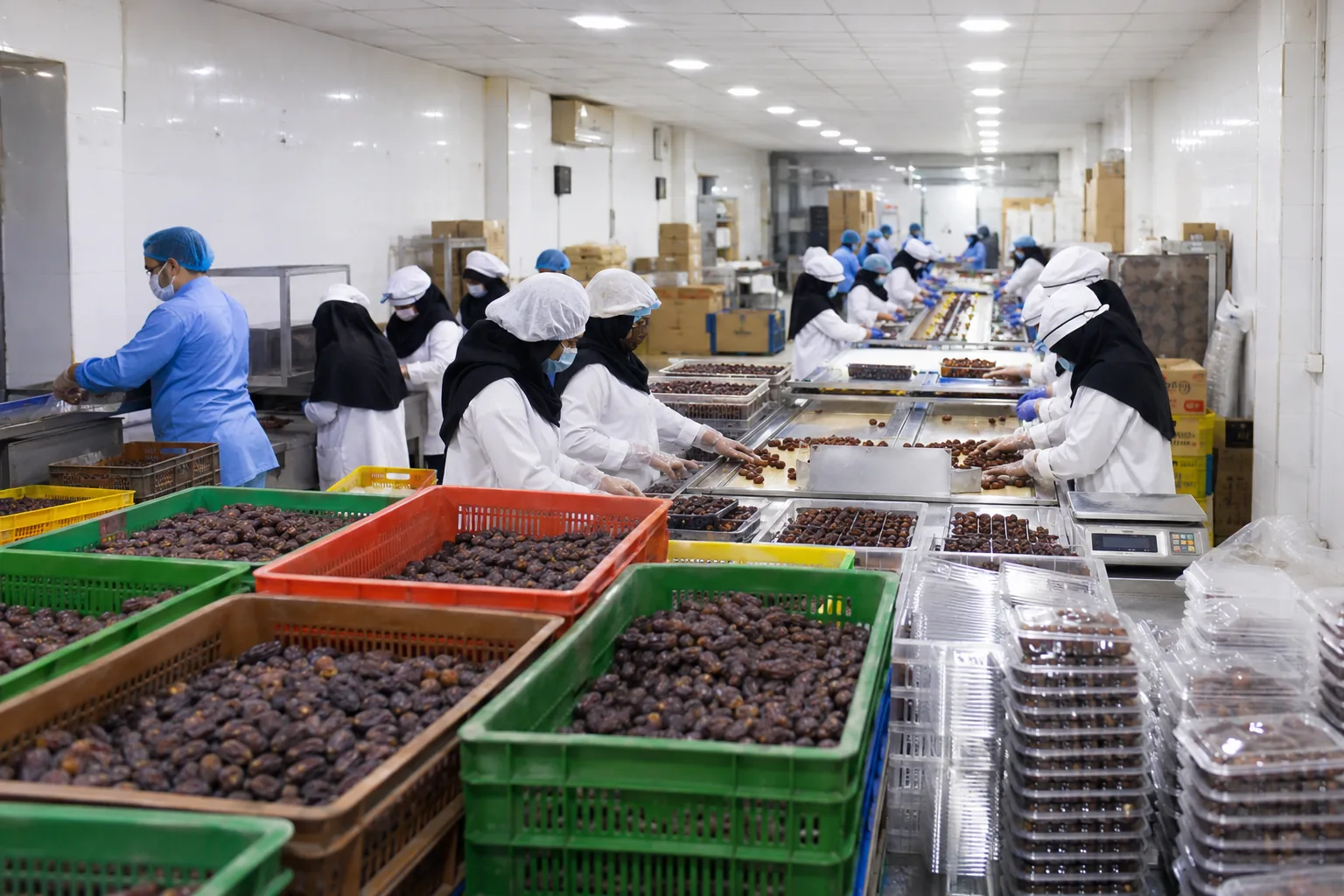
From palm to packed product
Select the maturity stage intended for the product.
Understand the fruit, source and condition of the lot.
Protect the qualities for which the fruit was selected.
See the fruit before deciding where it belongs.
Separate unacceptable fruit and organise natural variation.
Build a defined commercial specification.
Choose a format that fits the fruit and market.
Review weight, pack condition and presentation.
BEFORE THE BOX
Dates do not suddenly become a product when they enter a packing room. Their final character has already been influenced by cultivar, growing environment and harvest stage. A crisp yellow Kharak should not be judged as though it were a soft mature date; a semi-soft Kabkab should not be handled according to assumptions made for a dry cultivar.
That is why receiving begins with understanding. A lot has a source, a time, a maturity stage and a condition. Without a product definition, sorting becomes personal opinion. With a specification, sorting becomes selection.
Quality control only works when the expected product is clearly defined.
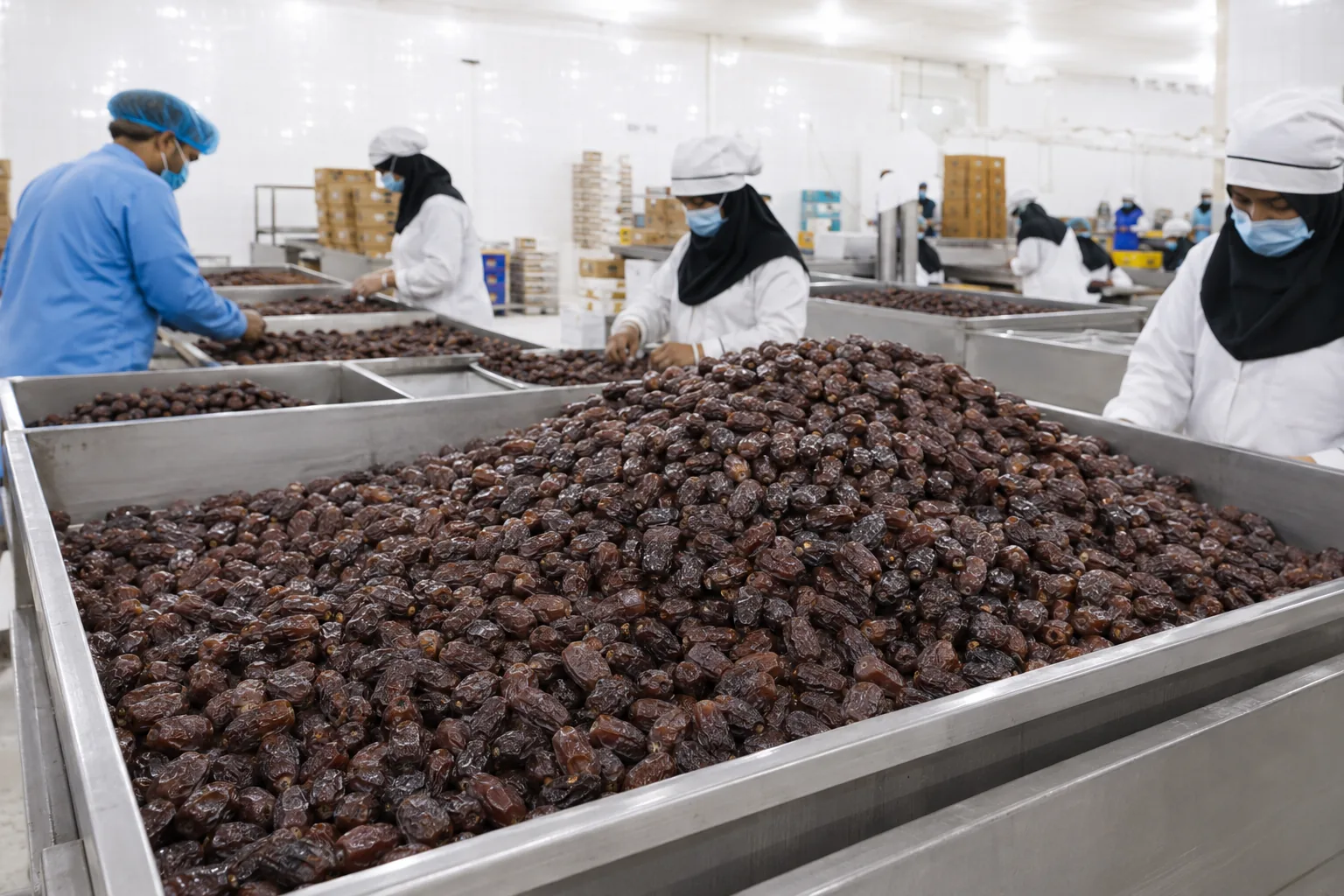
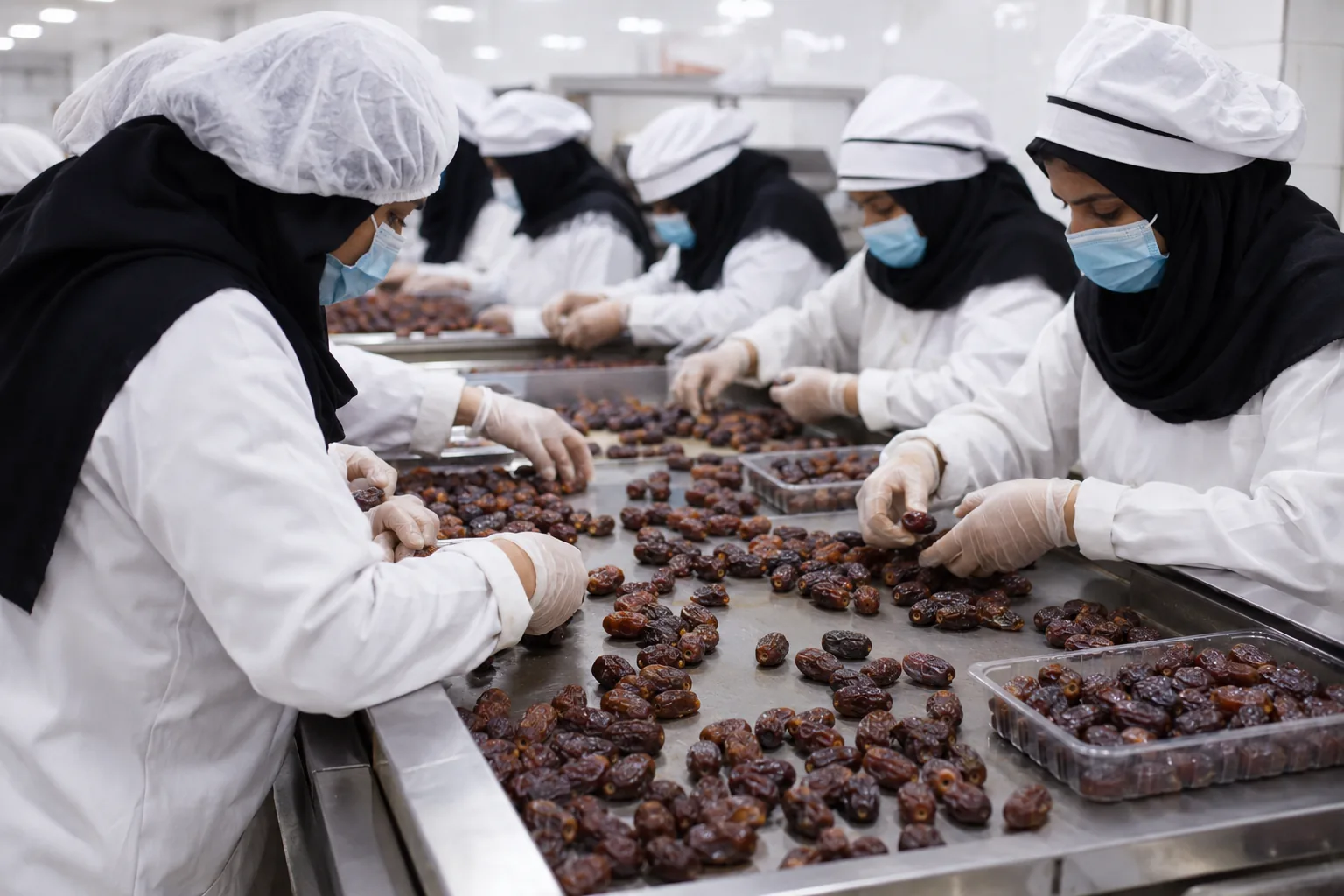
SORTING & INSPECTION
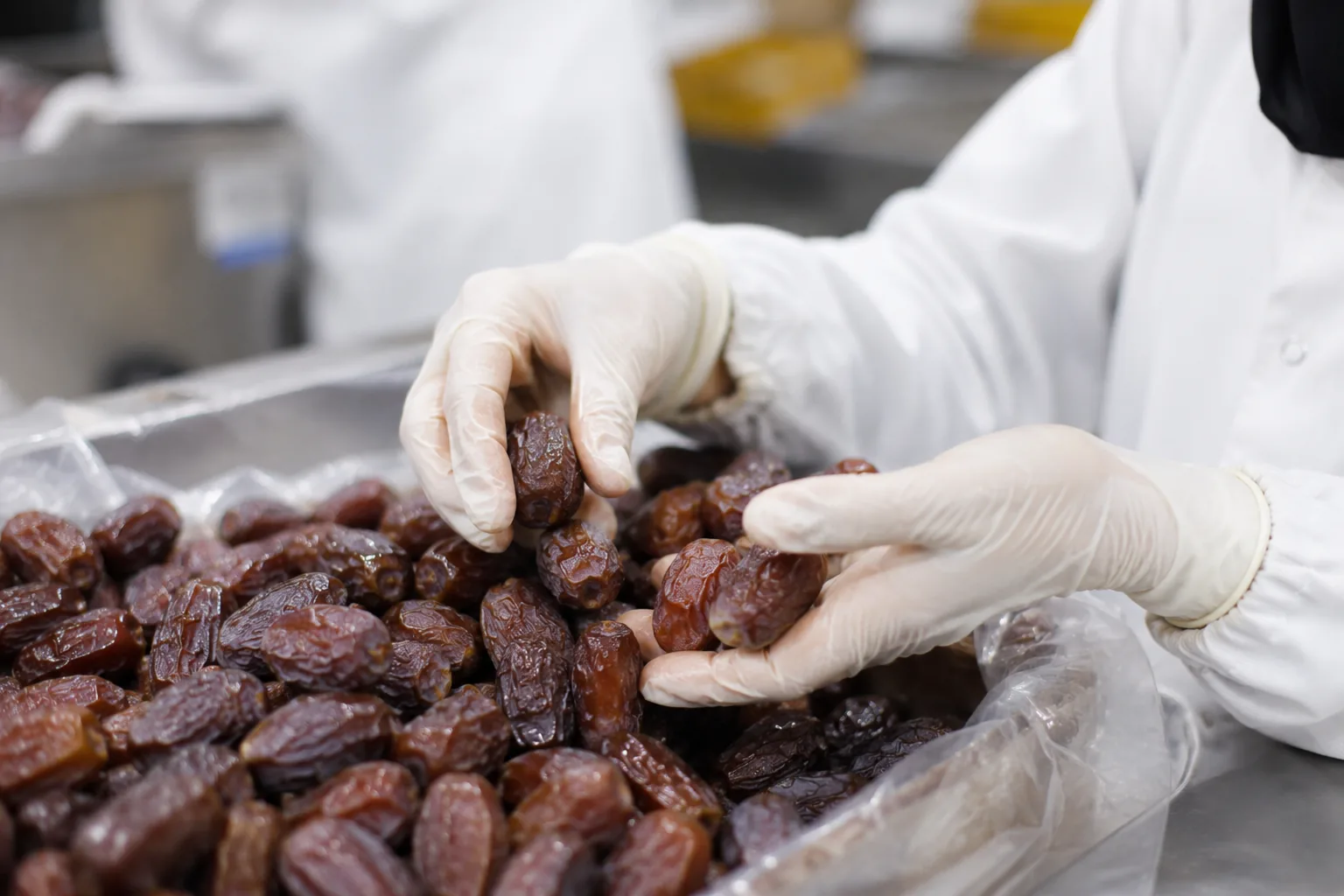
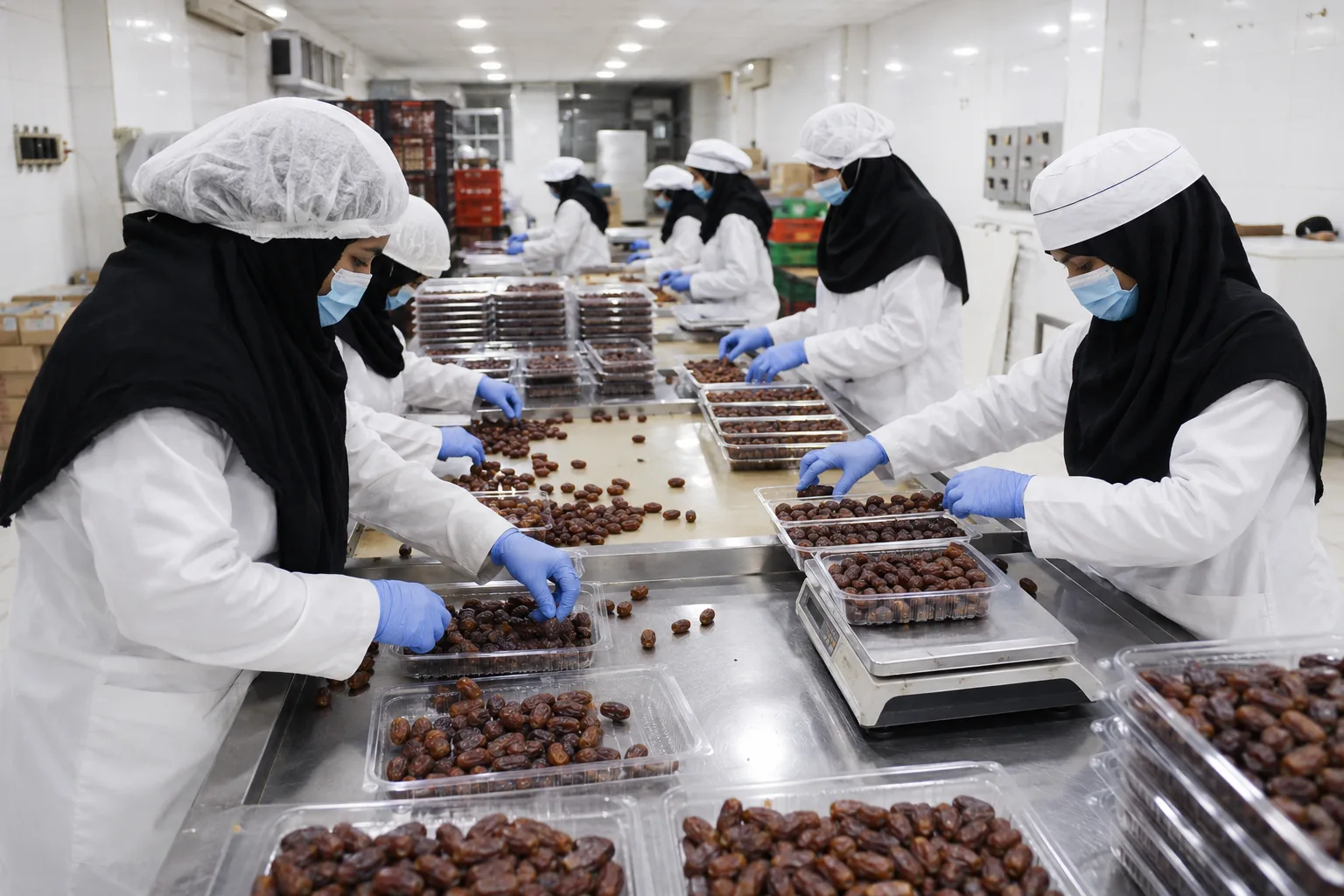
A luxury box shows the result. The sorting table shows the work. Fruit moves through the process, is observed, turned and compared. Surface condition, visible damage, abnormal deterioration, maturity, colour, firmness, size and visual balance may matter differently depending on the product being prepared.
Sorting is not only a division between good and bad. Sound fruit can still belong to different grades and presentations. A larger visually consistent group may suit a premium arrangement; another sound lot may be better for a practical loose-packed format.
Respect nature’s variation. Protect the buyer’s expectation.
THE PACKING ENVIRONMENT
The sorting line is where the final box begins. Trays, workers, repeated inspection and repeated packing are not separate from premium presentation — they are what make a consistent presentation possible.
A brand is not only the best box it has ever photographed. It is the product it can repeat with discipline: box after box, weight after weight and lot after lot.
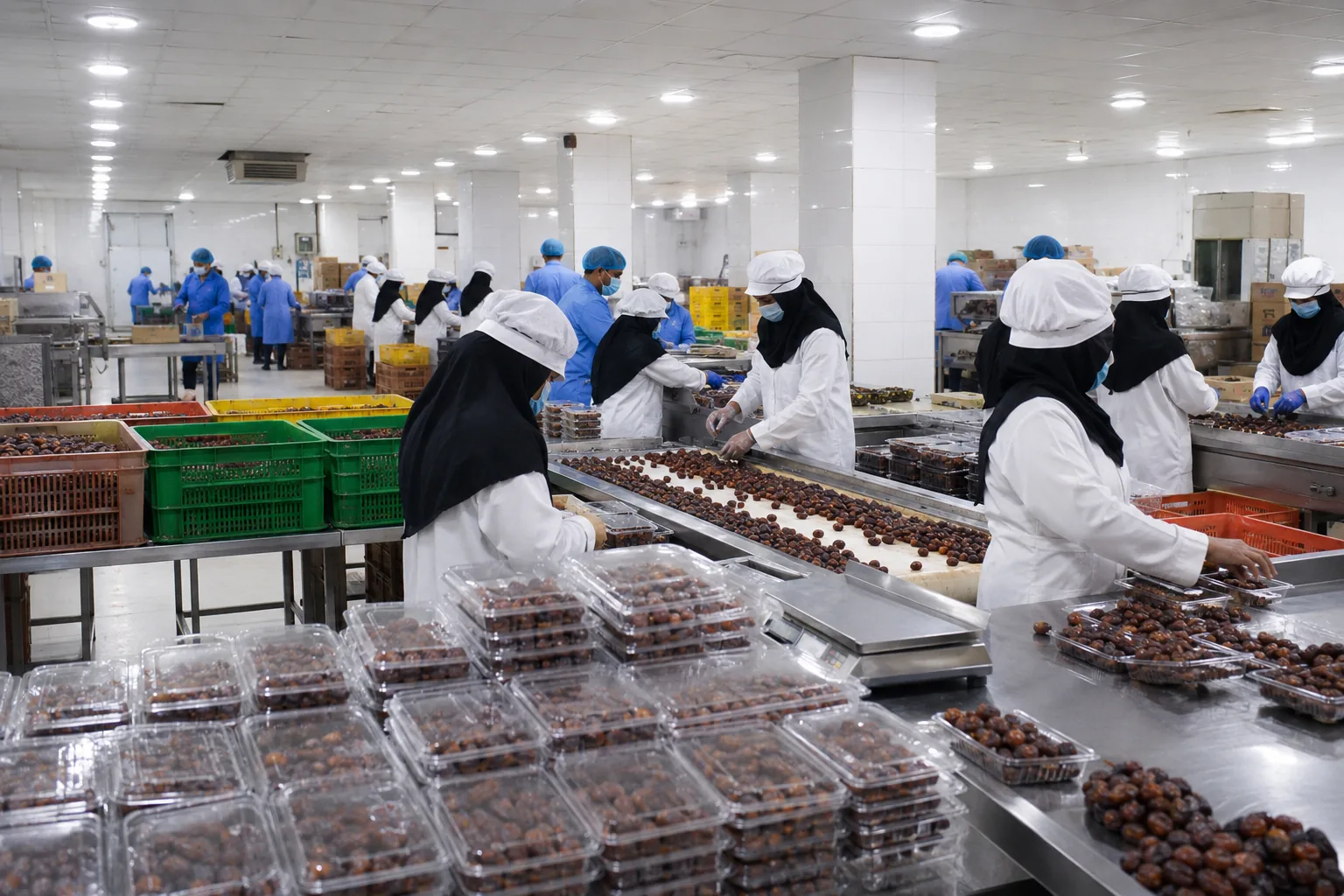
PACKAGING FORMATS
One package cannot intelligently serve every date, weight, customer or destination. We use different formats because the role of the package changes with the product and market.
Larger-capacity formats for regular household use and regional distribution. The 3 kg and 5 kg presentations show how pack depth, volume and internal arrangement can change with net weight.
3 kg · 5 kg · arranged presentation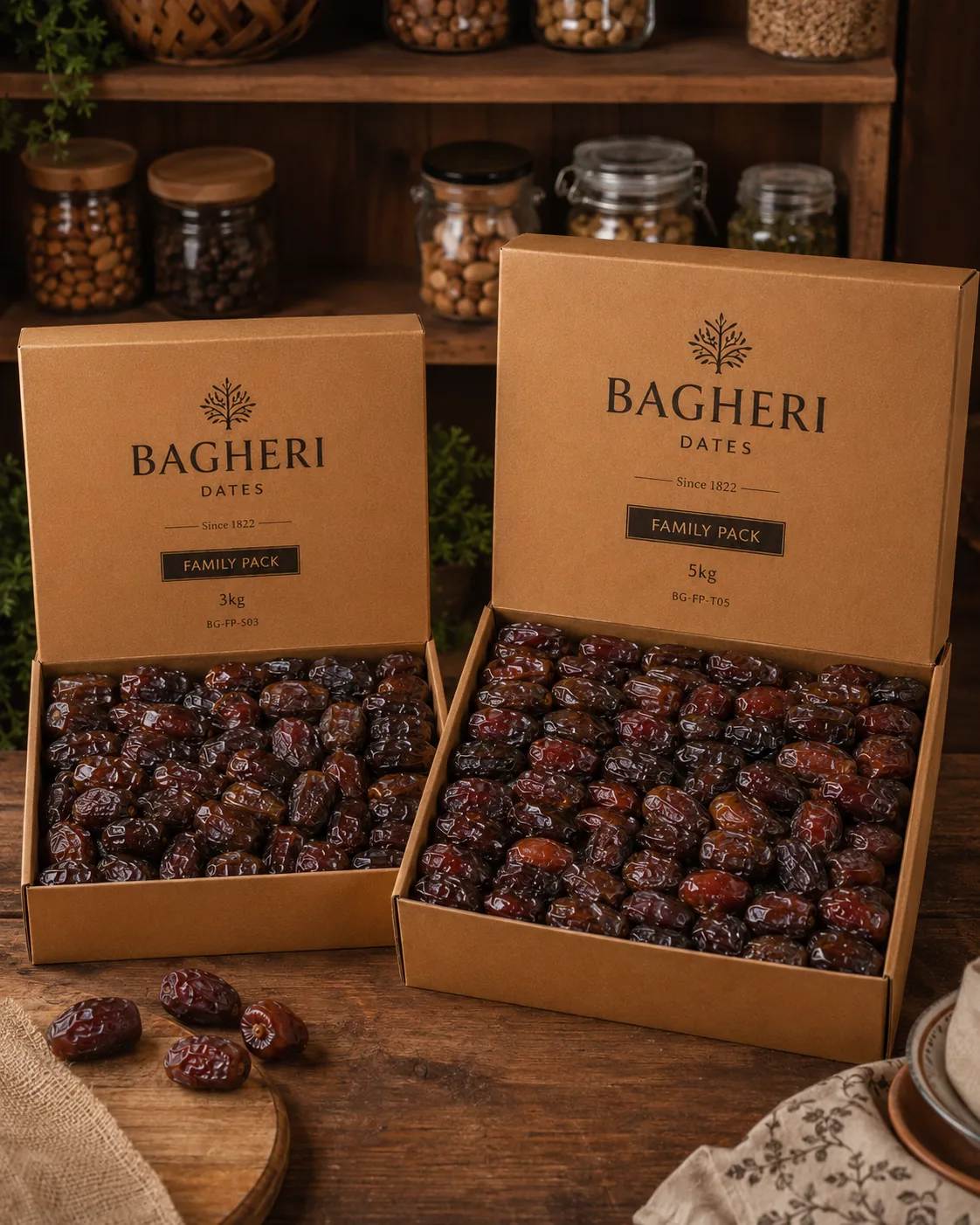
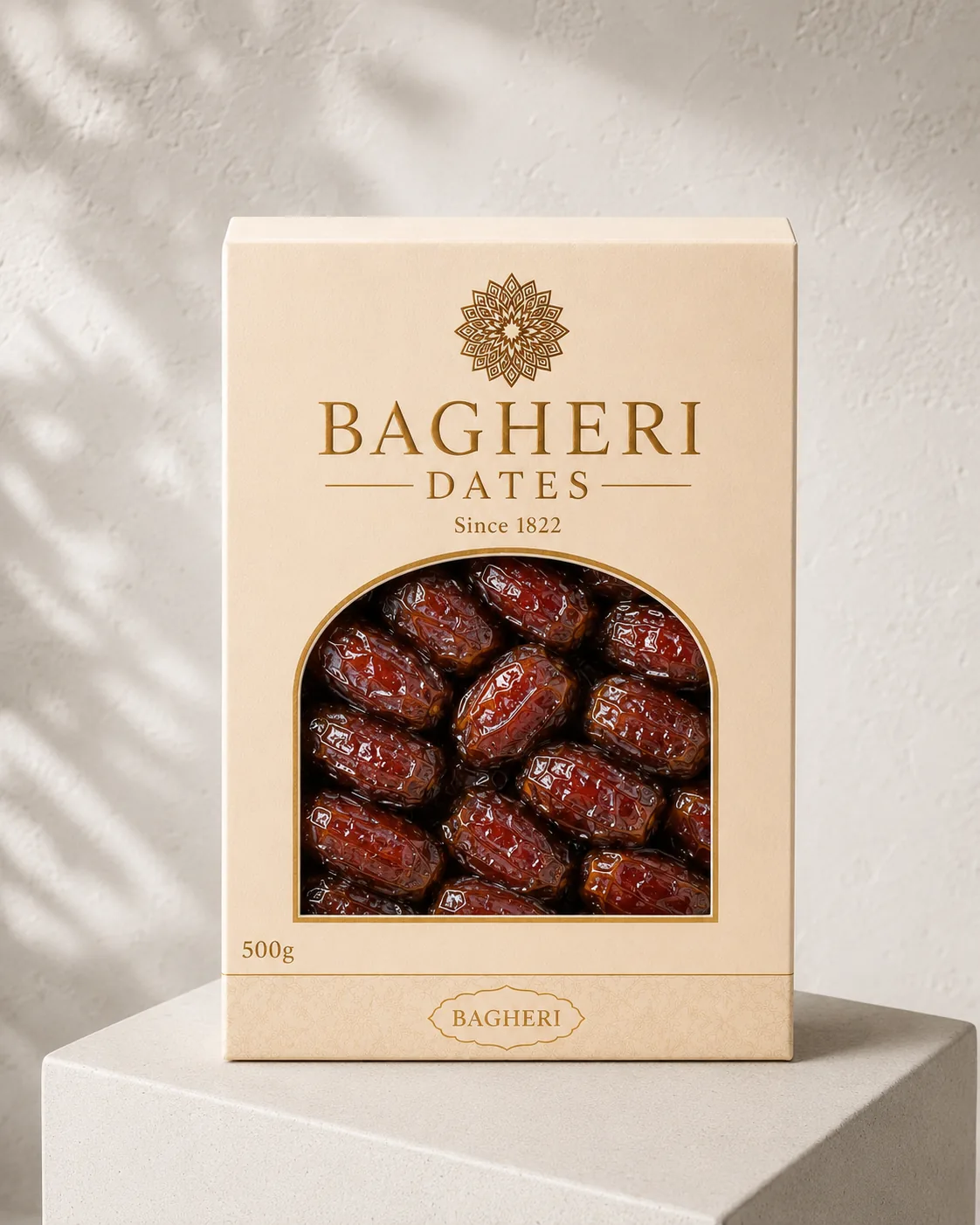
A visible-fruit format that makes the dates part of the front presentation. The package introduces the product without hiding it and is suited to carefully selected, visually coherent fruit.
500 g · visible product presentation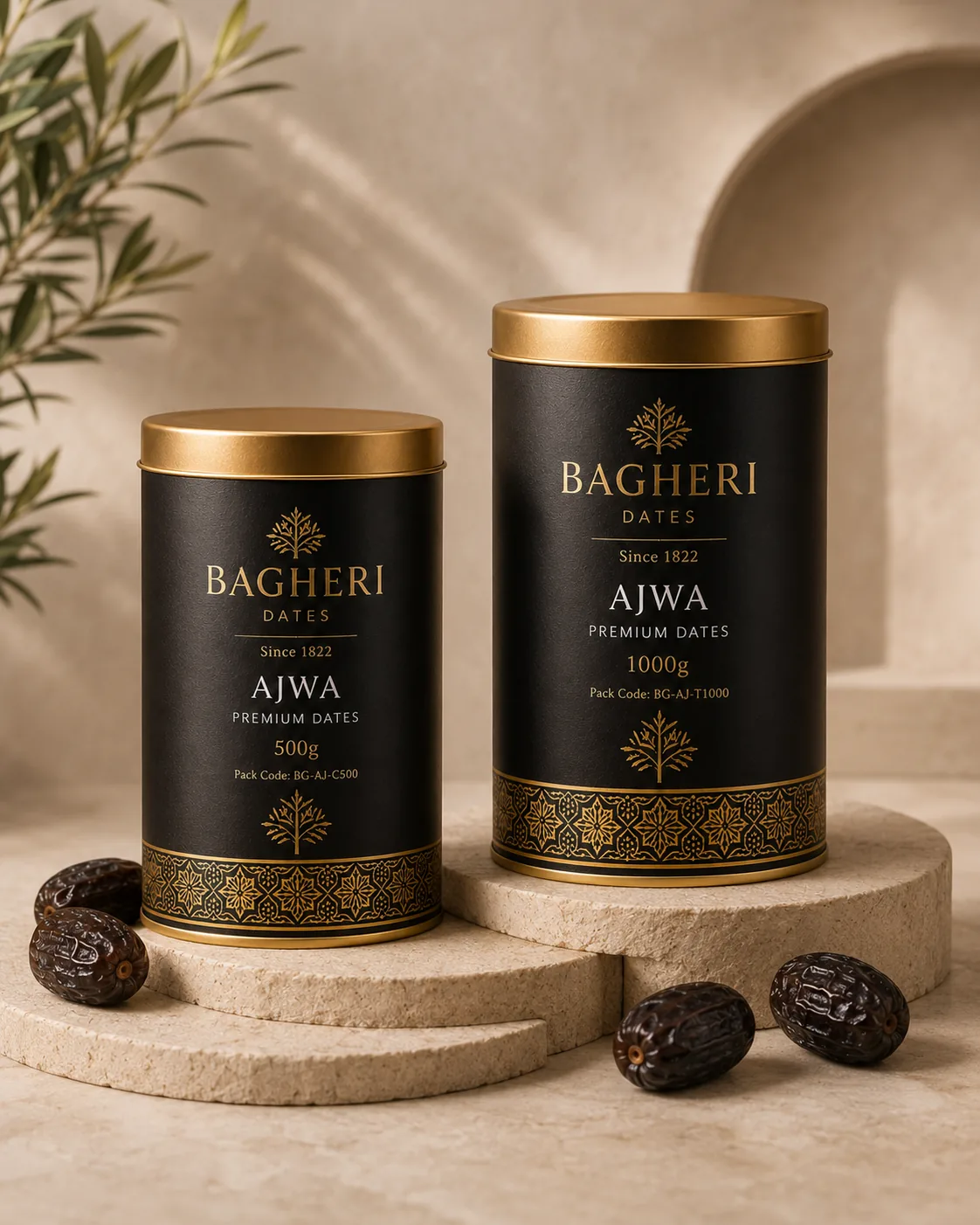
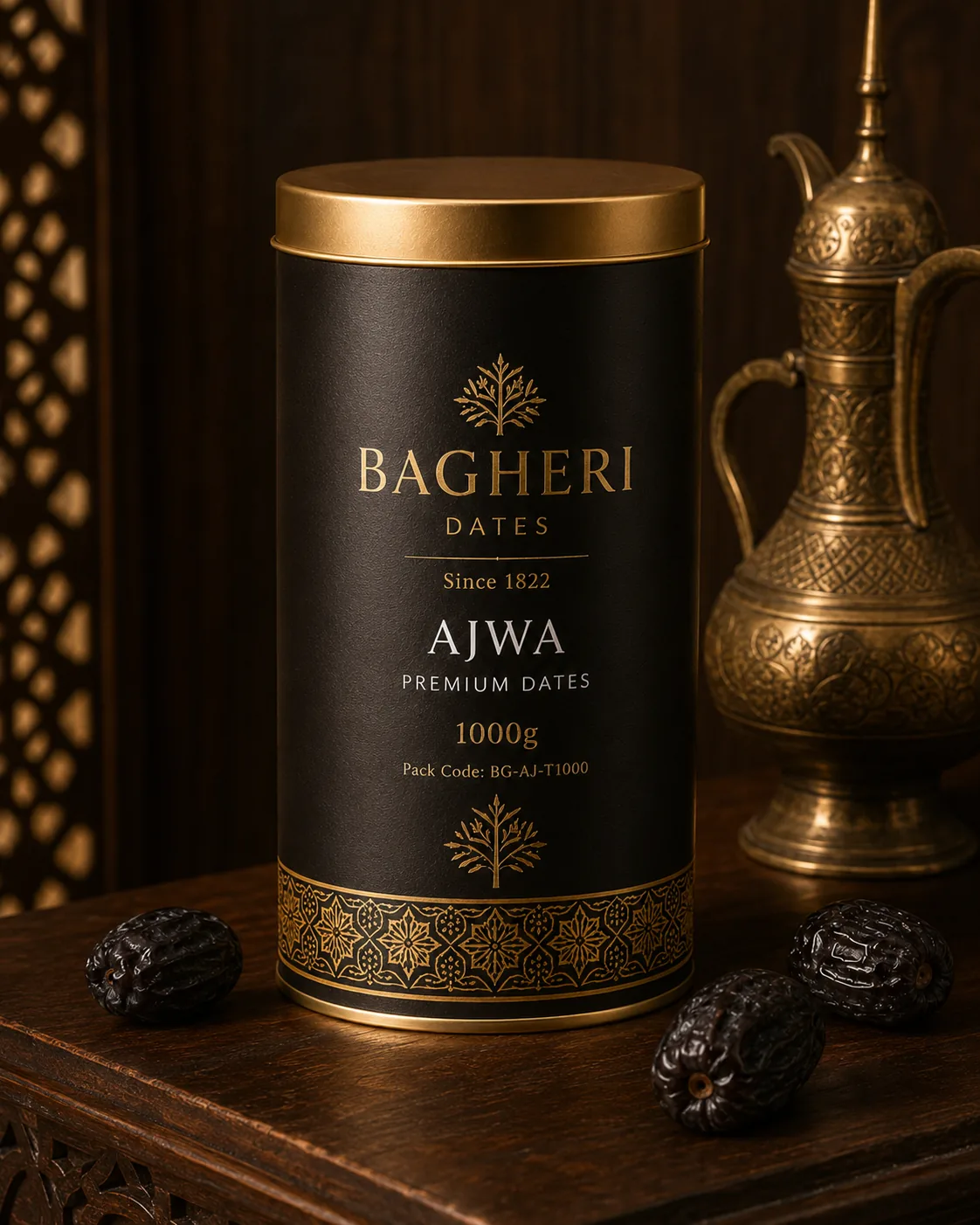
A structured premium format for selected SKUs and destination-specific presentation. The images show example tin formats across multiple capacities; product labelling and fruit specification depend on the actual SKU.
350 g · 500 g · 700 g · 1,000 gBAGHERI · TRADE
Retailers, distributors and import partners do not always need the same pack. Net weight, internal arrangement, shipping configuration and market presentation can be discussed around the intended product and destination.
Retail · family · premium · trade configurationPACKING
Before a date enters a package, the important questions should already be answered: which product, which grade, what net weight, loose or arranged, how much pressure the fruit can tolerate, and what journey the pack is expected to make.
Some dates are packed loose. Others are deliberately arranged by hand, where length, shape, direction and the visual rhythm of a row become part of the opening experience. Neither format is automatically “better.” The right format is the one that honestly fits the product and its intended use.
The hand does not manufacture the date. It gives order to what the palm produced.
PREMIUM PRESENTATION
Black, gold and heavy board can make a box look expensive. That is not enough. A premium pack begins with proportion, structure, appropriate materials and selected fruit that makes sense inside the package.
We believe luxury should come last: after harvest, handling, storage, sorting, selection and grading. A beautiful package cannot repair badly handled fruit. The box creates a promise; the fruit has to keep it.
EXPORT & TRADE
A supermarket buyer, a regional distributor and a premium gifting retailer may need different specifications. Tell us the destination, date type, estimated quantity and preferred pack weight. We will discuss the product before discussing the box.
FAQ
Sorting helps assess fruit against the intended product specification. It removes unacceptable fruit and also separates sound fruit according to characteristics relevant to different grades and pack formats.
No. Kharak, mature dates and different commercial grades can have different physical characteristics and uses. Package format, weight and presentation should reflect the actual product.
Yes. Some presentation formats require deliberate arrangement of individual fruits. In those formats, position and visual balance become part of the packing process.
Different products, weights, customer channels and destinations can require different packaging solutions. We believe the package should be built around the date and its intended use.
No. Packaging and fruit quality should be judged separately. Premium packaging creates a higher presentation expectation, but fruit selection and grading must happen before the dates enter the box.
BAGHERI is rooted in Dashtestan, Bushehr, in southern Iran — a date-growing landscape where our family relationship with palms extends through generations.